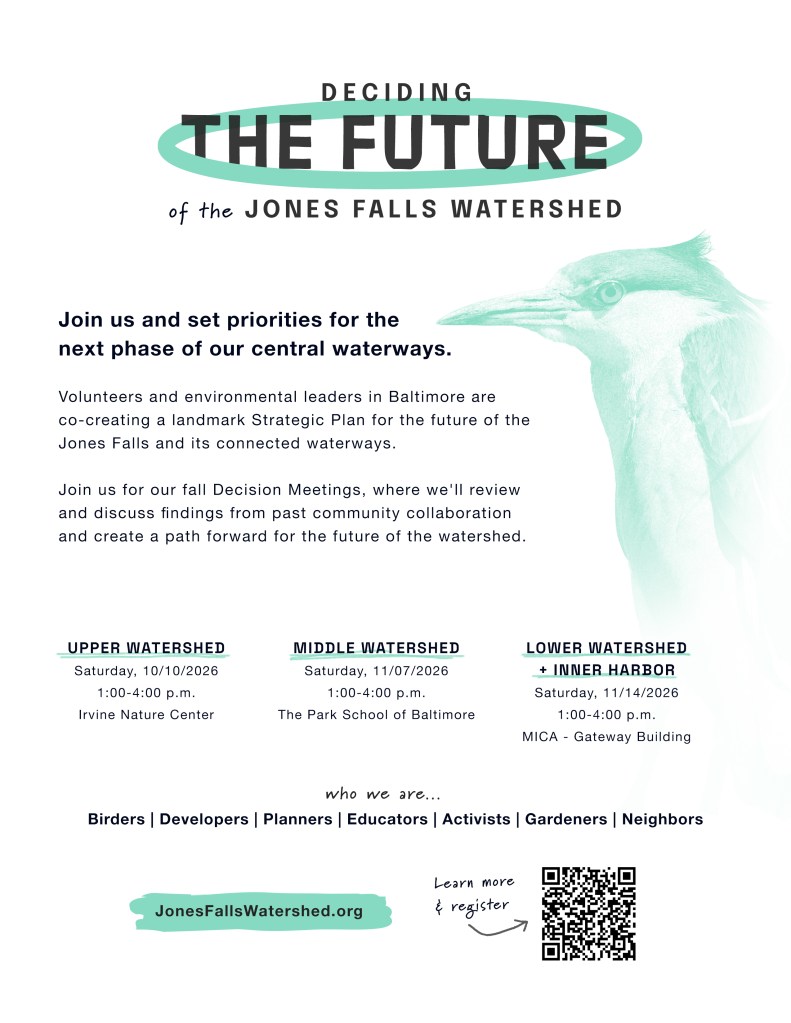
Join us for the second and third of our Fall Decision Meetings where we’ll review and discuss findings from past community collaboration and create a path forward for the future of the Watershed.
To register for the meeting location proximate to where you live or work, please scan the QR code or click here.
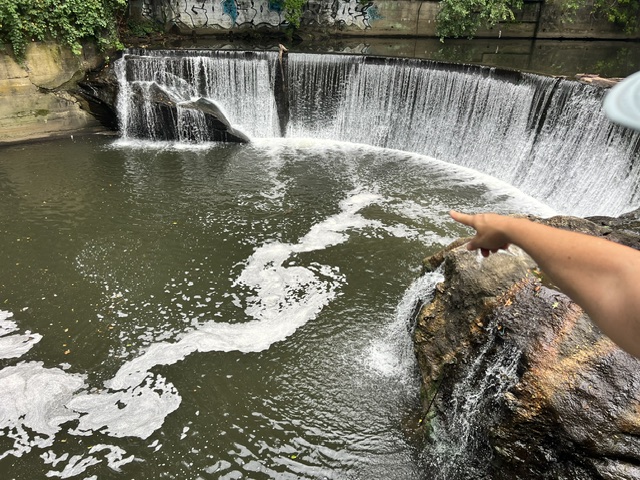
Prof. Stan Kemp (University of Baltimore) has been studying the biology and ecosystem of the lower Jones Falls for years, but he’d never seen a snapping turtle before. It was “Number 1.”
What’s the meaning of this? It kinda comes around to our recent Newsletter post about a river otter in the Jones Falls stream: improving local ecosystem habitat.
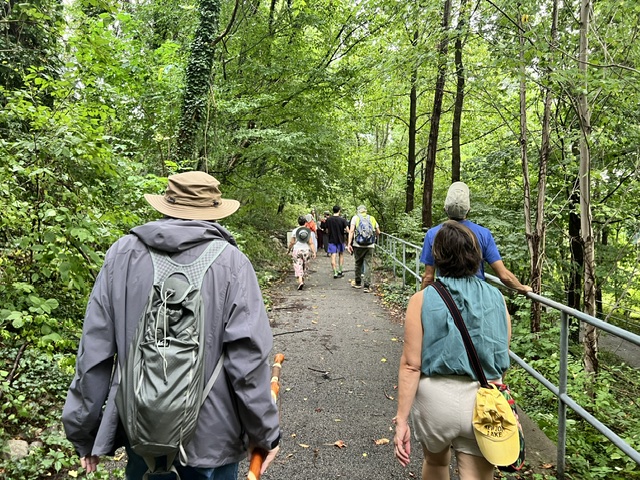
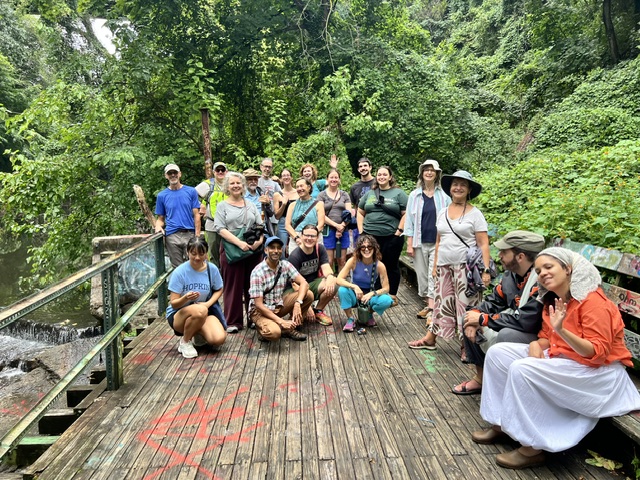
On August 27, more than 20 folks gathered for “Dreamwalk #2” along the Jones Falls, sponsored by Jones Falls 2076 and represented that day by Prof. Amand Pandian (Johns Hopkins University). From the meet-up, the group walked down the Jones Falls Trail to the Round Falls Dam, carefully scaling down to the viewing platform.
Sorry the photo aimed at the Dam doesn’t clearly show the snapping turtle, but we all saw it craning its neck above the waterline in the pool below the spillway.
Tunnel outfalls of buried stream tributaries built into the west embankment wall were also pointed out by Prof. Kemp as places evidencing “direct hydraulic action” between streets, other impervious surfaces and stream tributaries.
Prof. Pandian asked event attendees to think about what other species might we be sharing the city with in 2076? The question was answered by many while others appear to have answered different questions. A sampling: “American eel and oysters-NO zebra mussels” – “We will live with crawfish, beaver, coyote, bald eagle, strong healthy trees-fresh water” – “Remove the dam”.
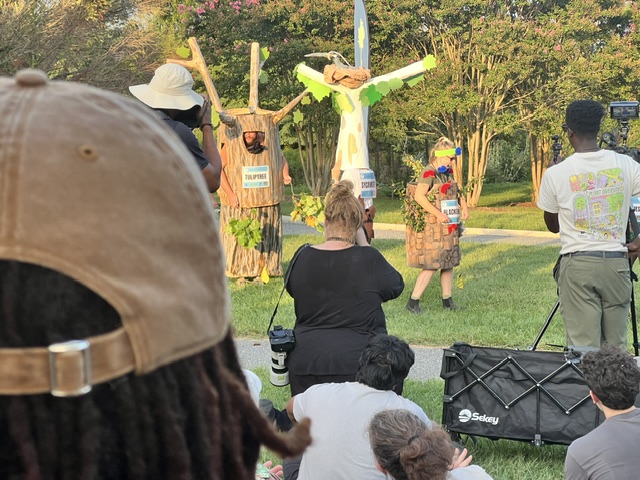
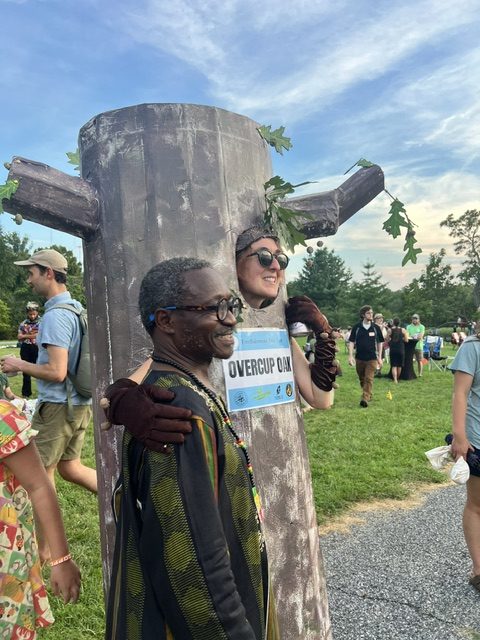
After much publicity, and multiple late spring resident surveys of their preferred tree among six (more than 1,500 votes cast), the finalist tree facsimiles gathered for the TreeBaltimore Summer Gathering main event at Cylburn Arboretum Mansion for a pathway trot.
Mayor Scott announced the winning tree–which, of course, crossed the finish line first. Noted by most in the crowd of TreeKeepers, Weed Warriors, Rec and Parks staff and families was the “felling” of the former City Tree of more than 50 years, a Callery pear tree, along the trot course.
The 6 contestants down-selected by the Tree Baltimore and Forestry staffs were: American sycamore; Butternut hickory, Blackgum, Tuliptree; Overcup oak; and Bald cyprus.
Mayor Scott declared that the Tuliptree (Liriodendron tulipfera) is the new official tree of the City. People cheered. Local media covered the event.
Here are two Proclamation Whereas’:
The current City tree, the “Chanticleer” pear, also known as Bradford pear, has been shown to be an invasive species in this region; and
A tulip tree is a symbol of the ecological and cultural resilience of Baltimore and is known for its long lifespan, strength, and adaptable nature, and the tulip tree is native to this region and benefits a myriad of species, including our iconic Baltimore oriole by providing food and habitat.
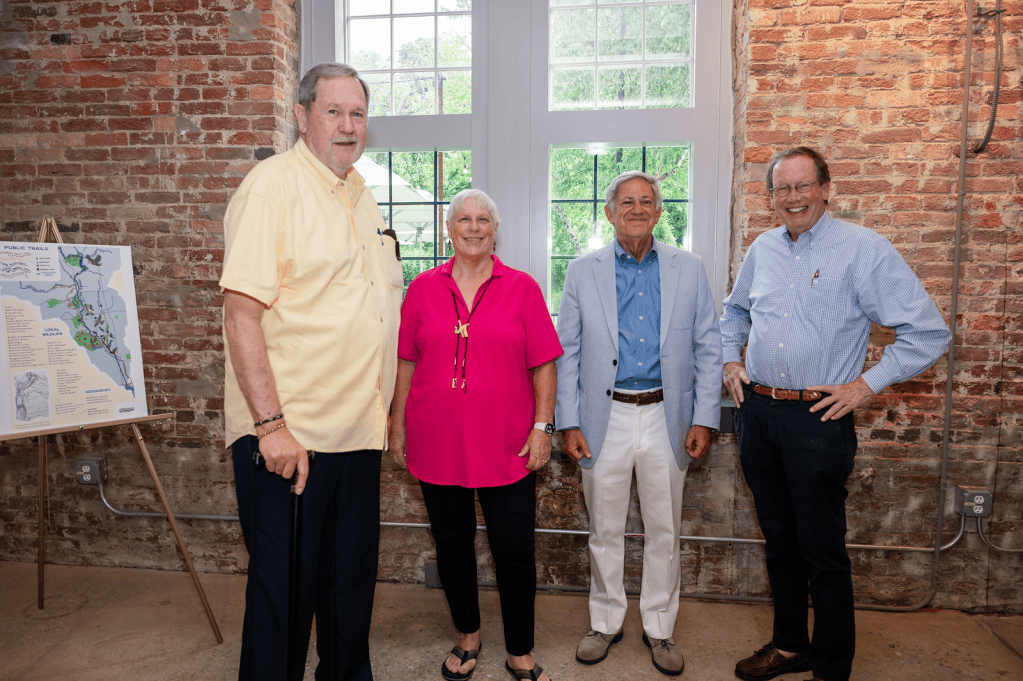
Tom Hall (MC) – David Carroll (Event Chair) – Sandy Sparks (FTJF President) – Honoree Fran Flanigan (coming in from stage right) Still photos by Side A Photography
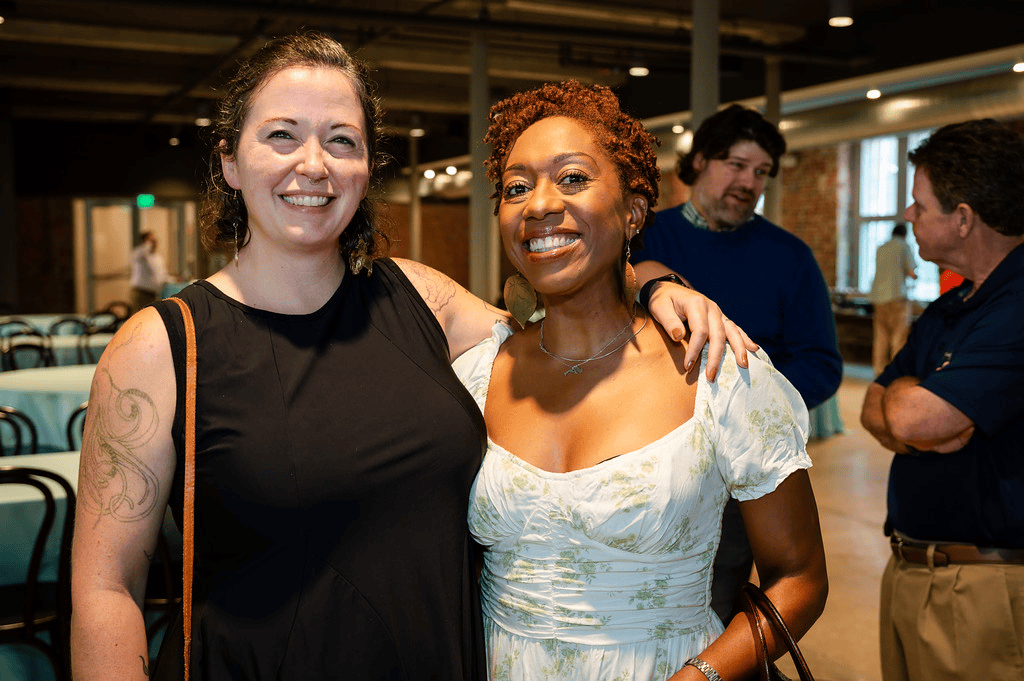
Many thanks for supporting our highly successful Jones Falls Celebrates “Champion” Francis Flanigan event on September 10 at Whitehall Mill! Please enjoy browsing through some of the photos from the evening taken by Tedd Henn of Side A Photography. Tap the View or Purchase button.
(c) Google MapsCommunity stakeholdersCouncilman Jones (left foreground)
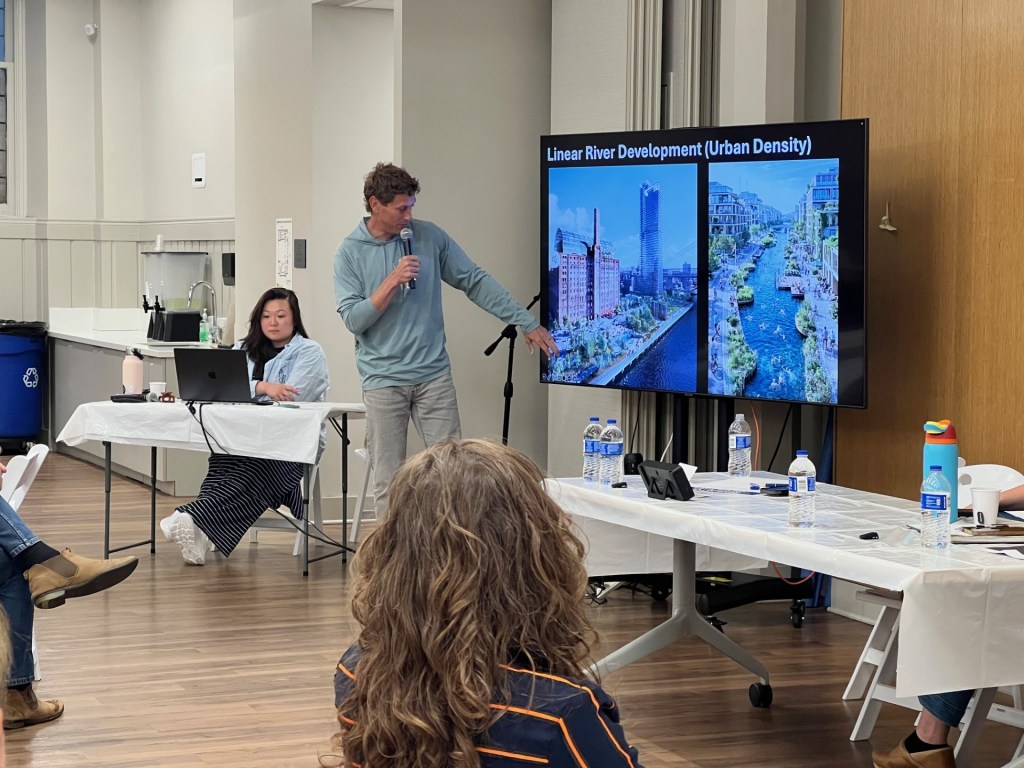
On July 13, Remington-based developer Seawall hosted another evening follow-up meeting with a self-guided walk around the Potts & Callahan combined sites on Falls Rd. Some 110 attended; double earlier turnouts.
Seawall co-founder Thibault Manekin’s opening remarks included asking attendees to introduce themselves to someone new and share why they’d come. He said he wanted accountability from the community as the project moves forward. Touring the properties ensued.
Reconvened, Manekin addressed the project’s economics, acknowledging the funding model won’t become apparent until a plan is set. But he said he wants the community to dictate the Falls Rd. site’s economics, apparently meaning its commercial and residential property preferences.
He then asked for audience comments. Several favored scaled re-development of the current industrial uses, suggesting new retail, residential and office occupancy running from Sisson St. in Remington downhill to Falls Rd. Others talked “greening” – calling for robust “de-pave” and stormwater management/green infrastructure programs, a linear park, and/or “daylighting” the Stony Run, a tributary which flows beneath the site into the stream. These would improve natural habitat health in the lower Jones Falls where most seemed to want some amount of new green space.
“Taller, narrower development over wide footprints” along the rock face between Sisson St. and Falls Rd. and on its thickly tree-shaded hillcrest was described by one. In Manekin’s words, the “big push” for linear parks had him worrying about effects of the non-income-producing uses being asked for.
Baltimore City Councilman Jermaine Jones was one of the last to speak: “I think we’re going to have something amazing,” adding, “What got us here is the fact that people thought that no one cared about this space ’til the community started talking.”
Manekin indicated the next meeting will include some design concepts.
-Taylor Deese, M.S. Candidate, Geography and Environmental Planning, Towson University, (tdeeseart@gmail.com)
Editor note: Linked here is Deese’s report on the May 4 Seawall meeting. And here, the initial 3/24 meeting.
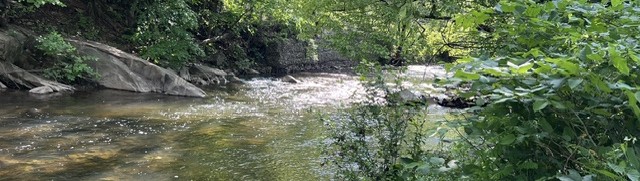
Long before the industrial boom that built the city we know today, the Jones Falls likely supported quite a few families of river otters, a semi-aquatic species, in the tributaries and main stem of the Jones Falls watershed.
A recent sighting of an individual swimming near Meadow Mill in Woodberry, beneath the roar of I-83, is a sign they’re capable of a comeback to our beloved urban streams.
River otters are an ecological indicator species, meaning their presence signals conditions are healthy enough to support them. While the presence of this individual is an indication of restoration progress to date, there is still work to be done.
If we want these otters to become more than occasional residents, continued investment in the health of the Jones Falls is necessary. Riparian buffers, stormwater management, and ensuring there are connected water and land corridors, are all actions that will support the return of river otters.
Fortunately, improving habitat for river otters comes with a suite of human community benefits too. Restoring native vegetation and floodplain function helps the Jones Falls absorb rainfall and reduce flooding while also supporting the habitat and prey these otters depend on.
A Jones Falls that’s healthier for river otters is likely to be a more publicly accessible, enjoyable Jones Falls for us as well.
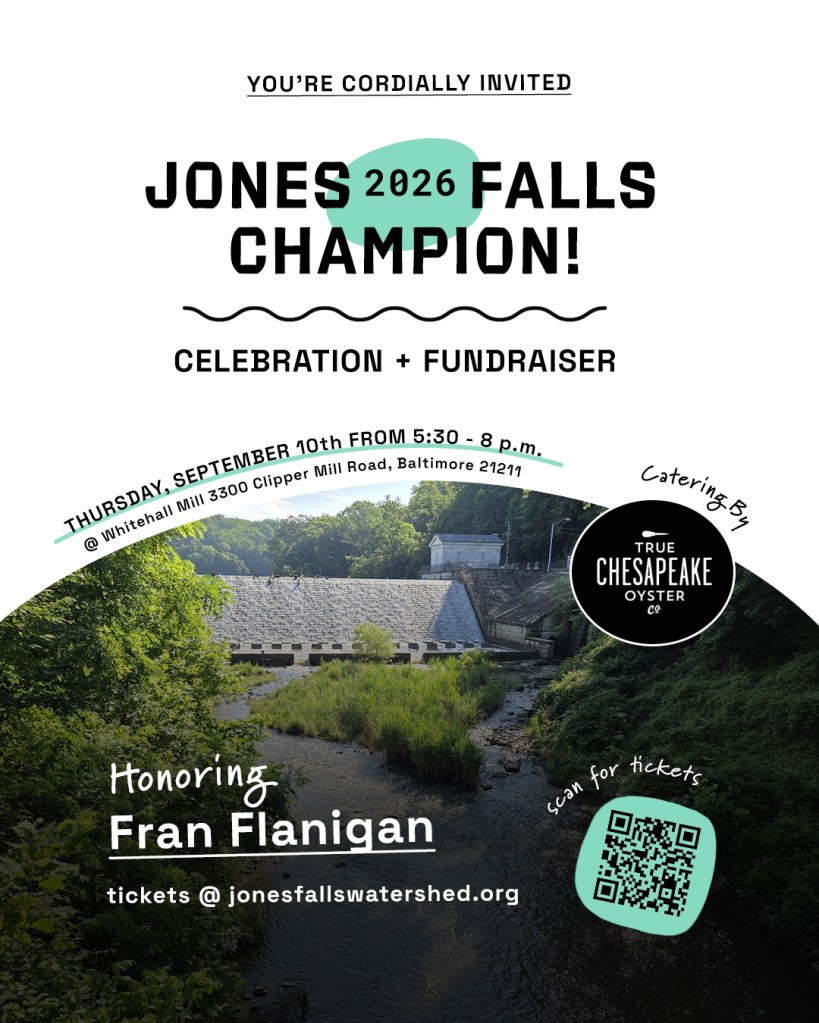
The Jones Falls Champion fundraiser for the community-led Jones Falls Watershed Strategic Plan celebrates Fran Flanigan. Join us to celebrate her impact and legacy.
Shaping the Future of the Jones Falls Watershed- The Jones Falls Stakeholder Digital Survey is now available for those of you who weren’t able to attend one of the Stakeholder meetings this past winter. We need your input by July 31! Also, see information about an important upcoming fundraiser for the Jones Falls Watershed Strategic Plan. Please click on the embedded link.
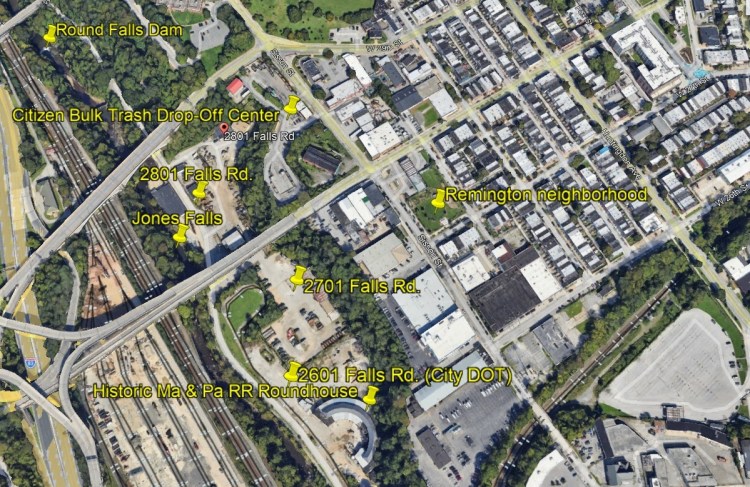
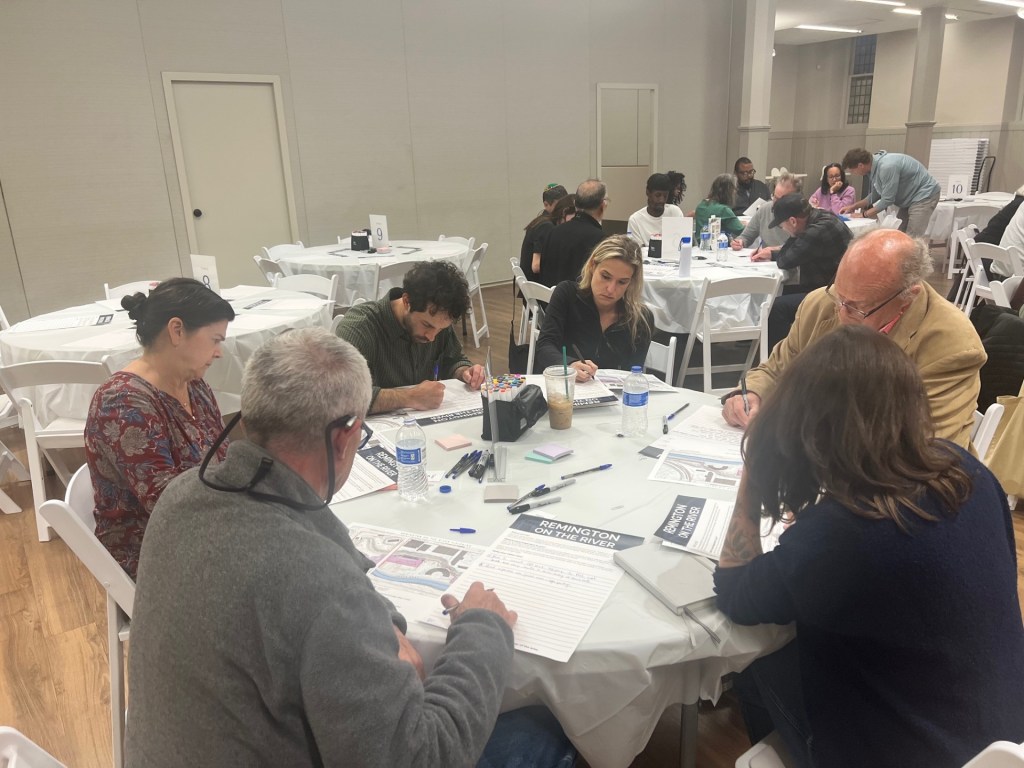
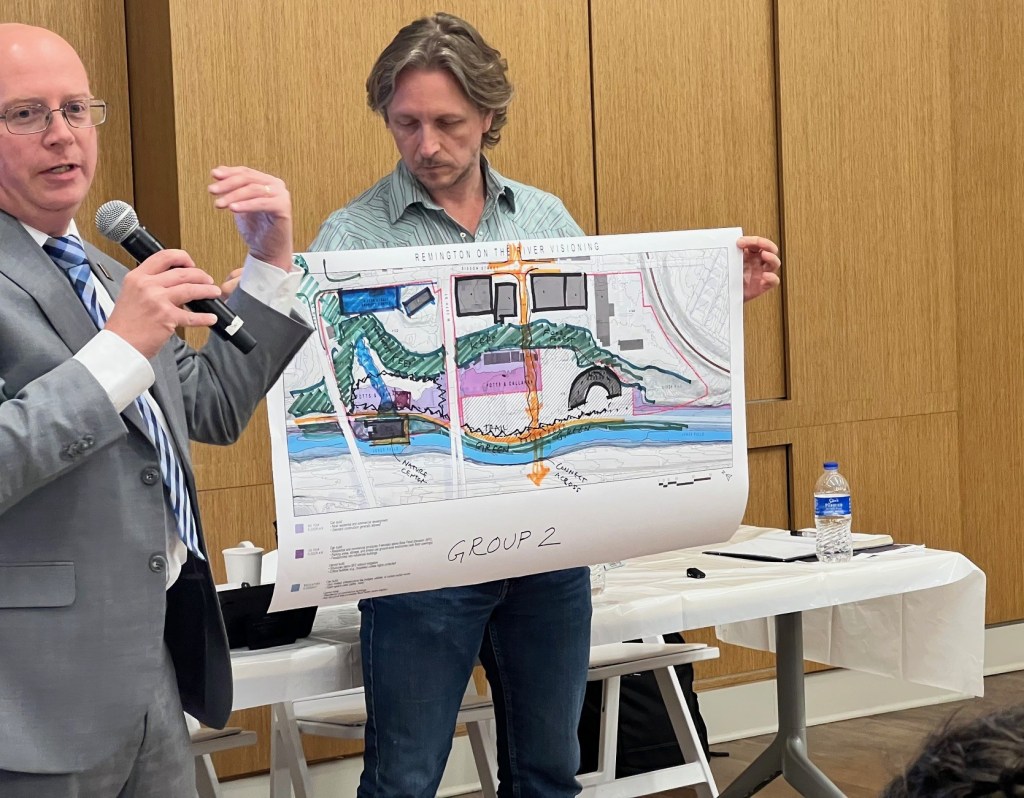
On May 4, Remington-based developer Seawall held its second community meeting about reuse of the Potts & Callahan Falls Rd. industrial properties it has under contract, this time drawing about 50 attendees to Beth Am Synagogue in Reservoir Hill. Seawall co-founder Thibault Manekin opened with a recap of the March 24 meeting themes: environmental concerns, development versus open space at the 2701-2801 Falls Rd. sites, vehicular access and community engagement.
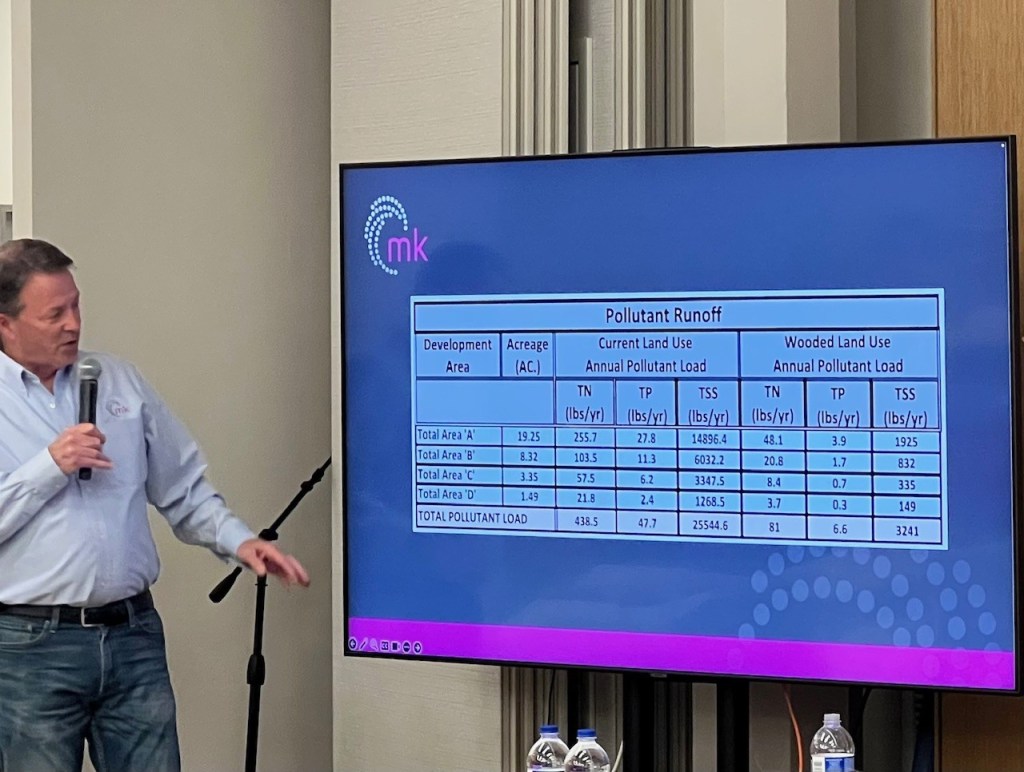
Responding to those themes, Seawall brought in Dan O’Leary of MK Consulting Engineers to present stream quality data. Leanna Frick of Blue Water Baltimore introduced O’Leary, citing Blue Water’s 2025 Annual Report finding that stormwater runoff and pollutants remain the watershed’s biggest threat. O’Leary reported that stormwater runoff from Seawall-controlled properties – from Hampden Ave. in Remington downslope through the Potts & Callahan-contracted properties on Falls Rd. – carries 12.8 tons of Total Suspended Solids (TSSs) into the Jones Falls each year, roughly eight times what the same land area would produce under wooded land use.
Manekin then led a design charette of the immediate area surrounding the Potts & Callahan sites and the stream. (He credited the charetting idea to the Jones Falls 2076’s River Reimagining workshops.) Recurring ideas across tables included: daylighting the Stony Run; constructing a funicular to address the steep gradient from Sisson St/Remington down to Falls Rd.; adding a forested buffer along the crest of the hill; building an amphitheater; and, reducing car access on Falls Rd.
A follow-up meeting and walk-around was held at the Potts & Callahan sites early evening July 13. It will be reported on soon at our SM and website platforms.
-Taylor Deese, M.S. Candidate, Geography and Environmental Planning, Towson University, (tdeeseart@gmail.com)