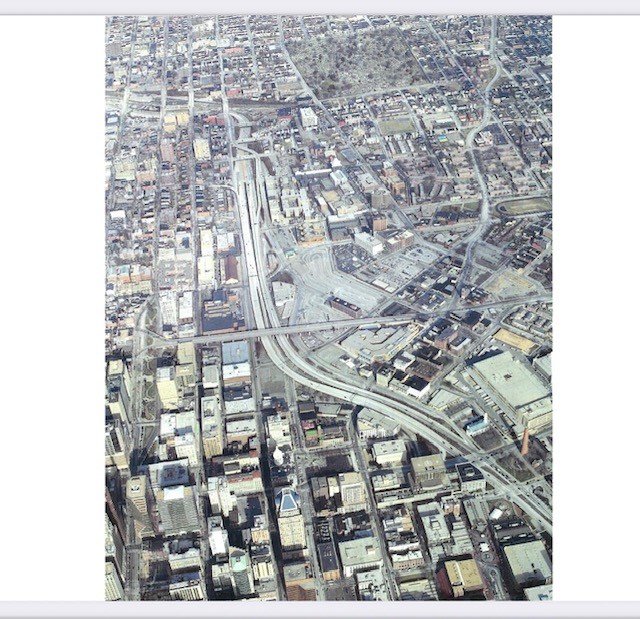
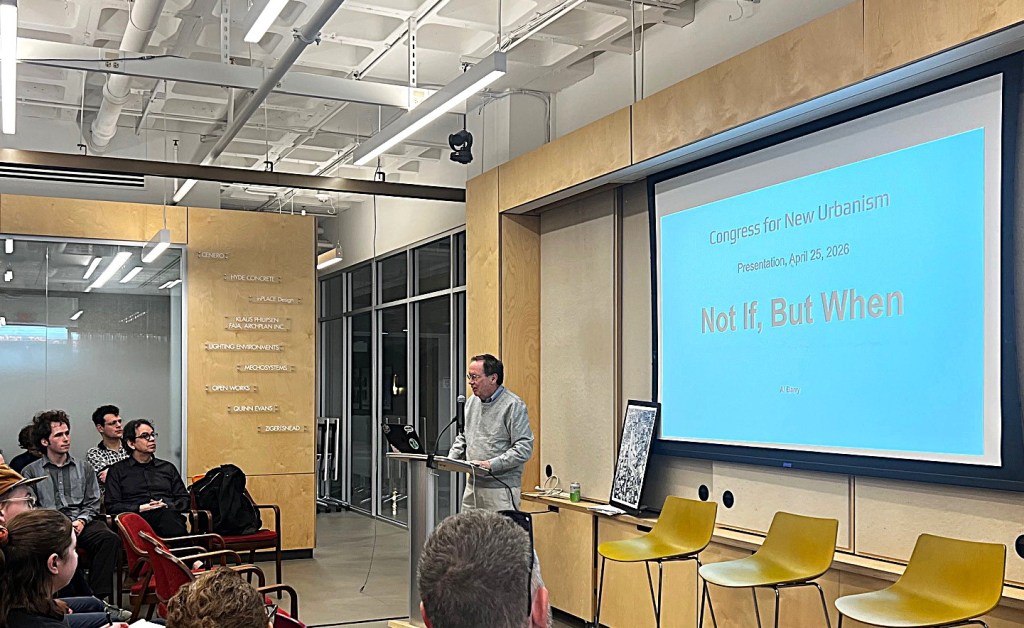
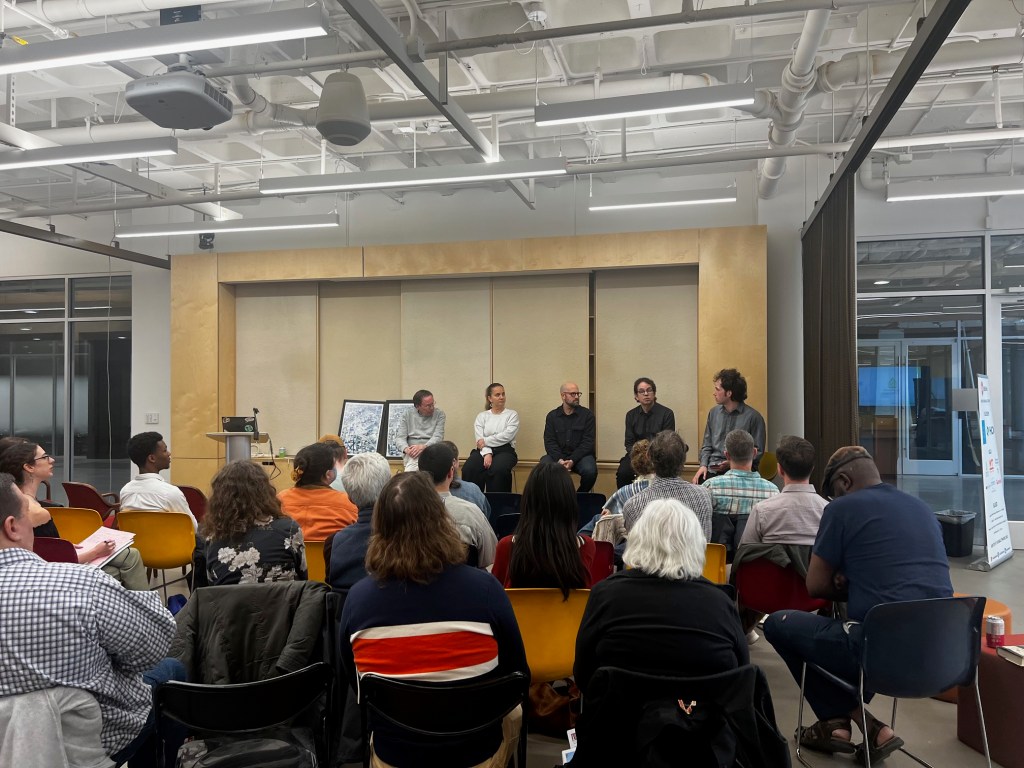
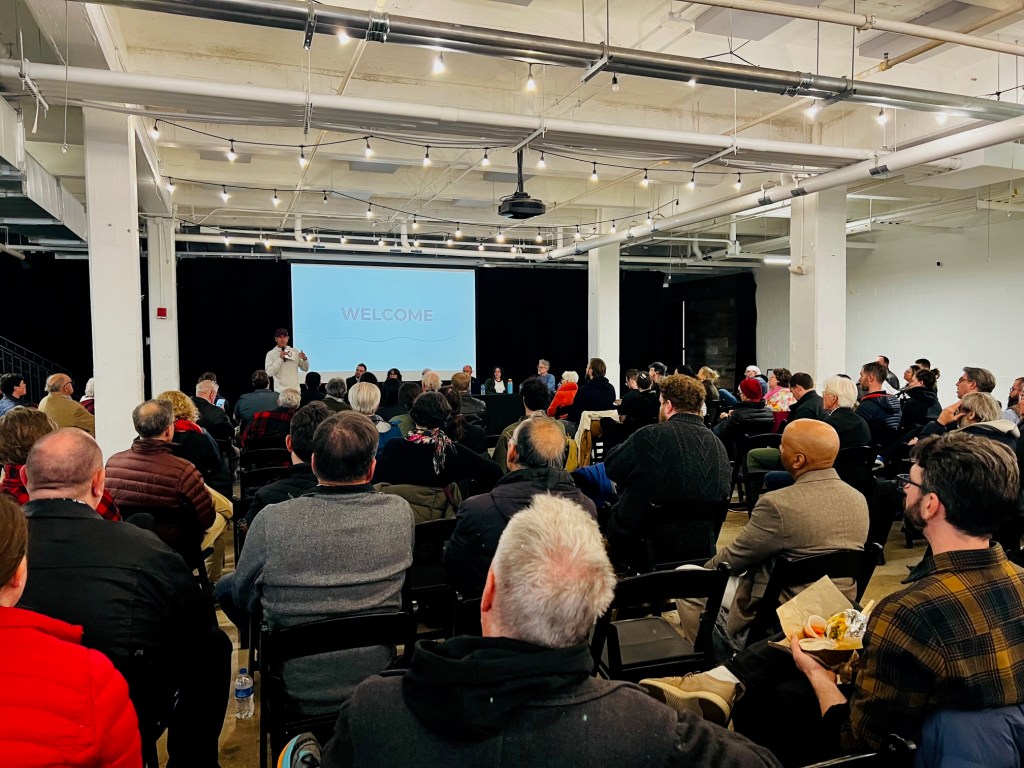
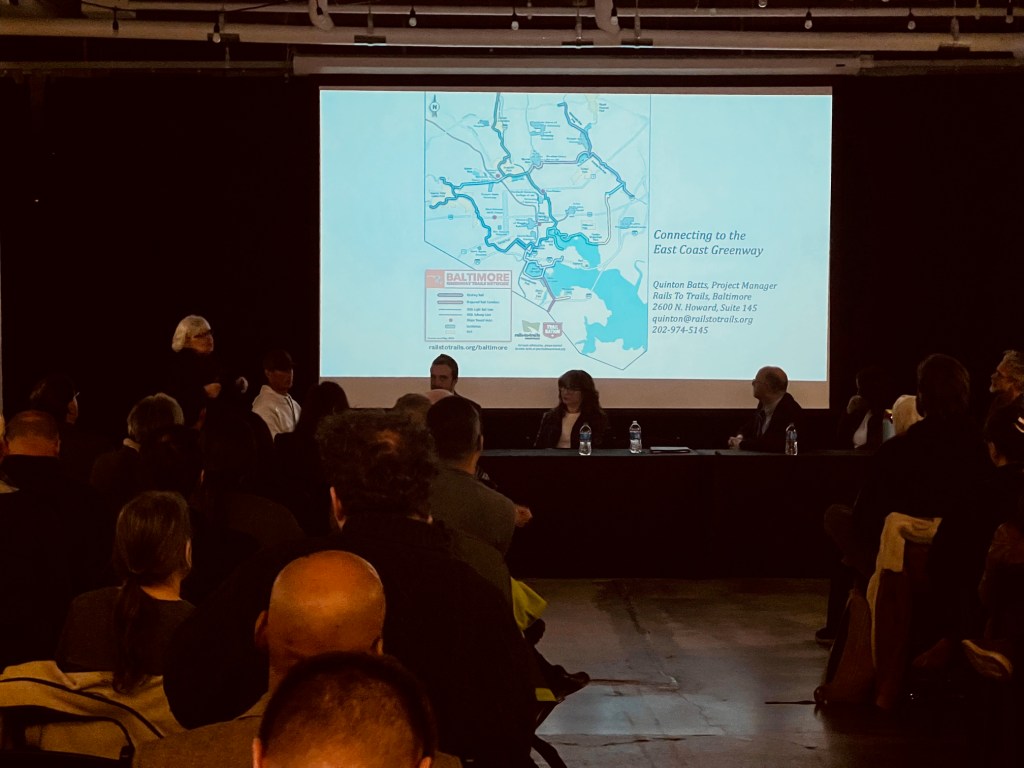
On April 25, The Congress for the New Urbanism Mid-Atlantic Chapter convened a panel of urban planning experts — Al Barry, Pavlina Ilieva, Gabriel Kroiz and Marc Wouters — for a symposium on removing the Jones Falls Expressway (JFX) along the lower Jones Falls to “daylight” more of the stream. The event came at a time when public interest around the vitality of the Jones Falls valley has been at its highest level in recent memory.
A problem we sought to address was that familiarity with JFX removal planning efforts had seemingly been lost. Our panel of experts reopened the topic, featuring local urban planning history, international precedents and real-life expressway removal implementation. Al Barry argued that the lower JFX coming down is “not a matter of if, but when”.
At its heart, the event was not a launch of an organized highway removal coalition. But, it was an opportunity to explore rationale and means utilized in other cities for restoring waterway views and urban green space rather than rebuilding crumbling expressway infrastructure for another 50 years.
“Daylighting” is an appealing concept, but advocates must go further. In his remarks, City Councilman Zac Blanchard noted the success of a lower JFX “daylighting” campaign will hinge on the ability of organizers to articulate a positive vision that will bring investment, amenities and greater cohesion to the surrounding areas; especially disinvested city neighborhoods lying to the east of the Jones Falls. Advocates including FTJF, Blue Water Baltimore and state and local stakeholders must come together as an alliance to push for a dense, fine-grained and diverse eco-district that stitches Mount Vernon and Old Town together through global best practices.
-Julian Frost, The Congress for the New Urbanism Mid-Atlantic Chapter (julianfrost71@gmail.com)
It’s been years, if not decades, since the lower Jones Falls stream, north of the Howard St. undergrounding, has had a planting plan for new trees and shrubs, much less Maryland natives.
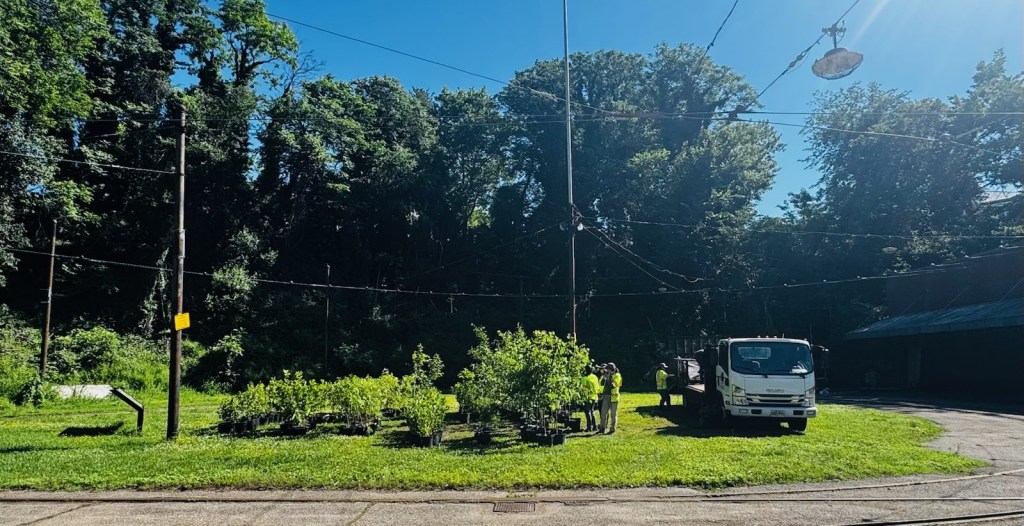
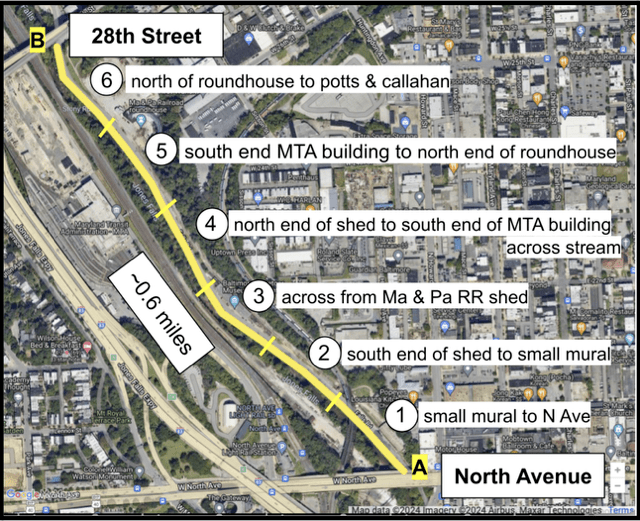
For FTJF Stewardship’s 0.6 mi. focus area running from the Jones Falls Trail crossover at the Baltimore Streetcar Museum north to the Round Falls Dam, 30 over- and 50 under-story trees plus 125 shrubs were purchased for volunteer installation with assistance from a hired landscape contractor. The plan was afforded by the FTJF’s “Jones Falls Trail Invasive Tree Management and Native Replanting in a Riparian Zone” grant award by the Chesapeake Bay Trust. (We first reported this win in our Summer 2025 Newsletter.)
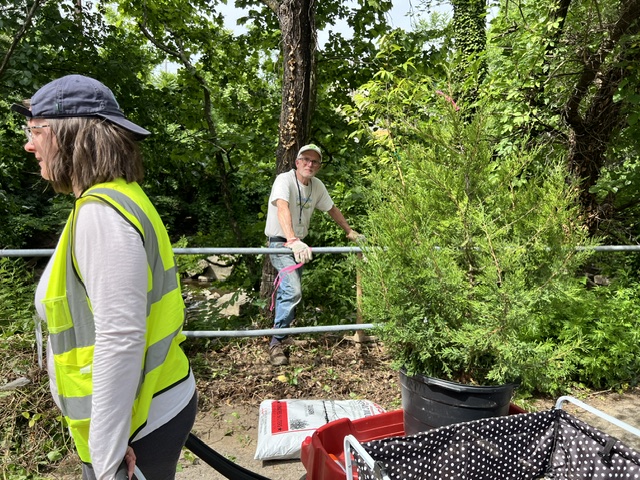
Our “Party” volunteers spent months preparing the planting area by removing NNI (Non-native invasive species) vines and other plants. The contractor removed a number of larger Tree-of-heaven NNIs.
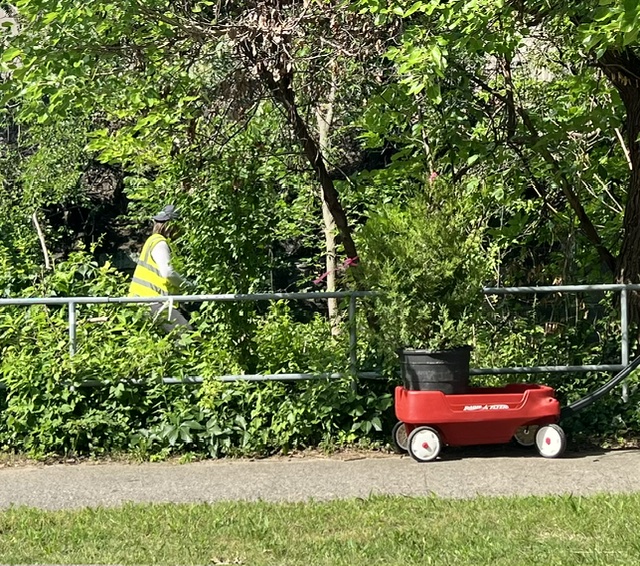
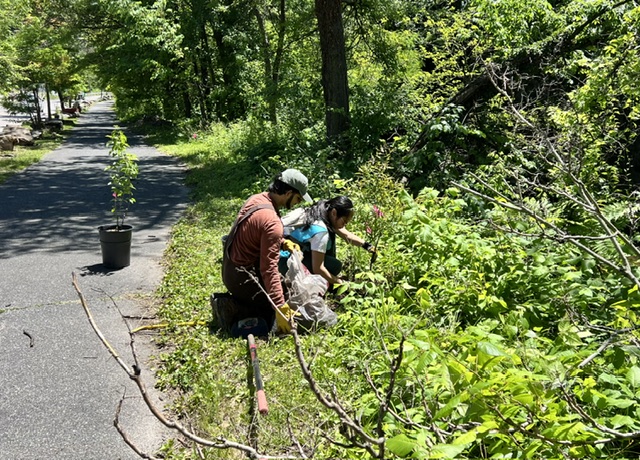
On Saturday, May 30th, we hosted Party #60 in both morning and afternoon planting sessions. Nearly 150 of 205 plants were put in the ground by some 30 volunteers. Since then we’ve been planting what remained while beginning annual maintenance work.
At the GRIA (Greater Remington Improvement Assoc.) meeting on Wednesday night, May 20, a phalanx of reps from BGE and AMTRAK presented their findings about the need for 80′-monopole- or alternative 65′ H-frame-supported transmission lines crossing the Jones Falls from the DPW Salt Dome, just north of North Ave., to the mixed-use South Remington neighborhood to the east. As told by BGE reps, these new transmission wires, which would continue providing power to 48,000 residents, are necessitated by the construction of the new Frederick Douglass RR Tunnel to replace the 150-year-old B& P Tunnel through central West Baltimore.
GRIA Board members and others attending talked over the presenters, saying they felt disrespected by the process through which BGE got the Maryland Public Service Commission’s approval in just over 30 days. That approval process did not require public meetings although BGE indicated there would be some.
Now, Amtrak has identified a 2-year window to take the drawings to 100% design and open the new Tunnel by 2028. Meanwhile, it’s been a year since BGE last provided any information to GRIA about the project.
An expert’s assurance and a consolation… Assurance- According to a BGE expert who attended and tried to explain a complicated lesson about the transmission of high voltage, it is virtually infeasible to bury the necessary wires between the North Ave. and the South Remington transmission stations.
Consolation- Instead of the originally proposed 140′ towers, two alternatives were offered: one showing an 80′ pole and the other a 65′ H-shaped structure.
Briefly Looking Back at African American Life in the Jones Falls ValleyChattolanee – Baltimore County
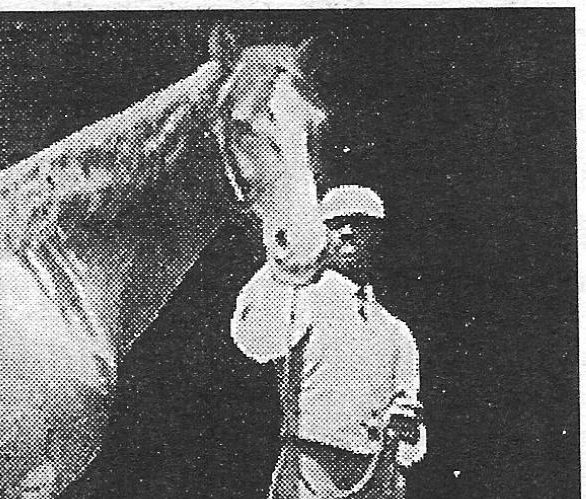
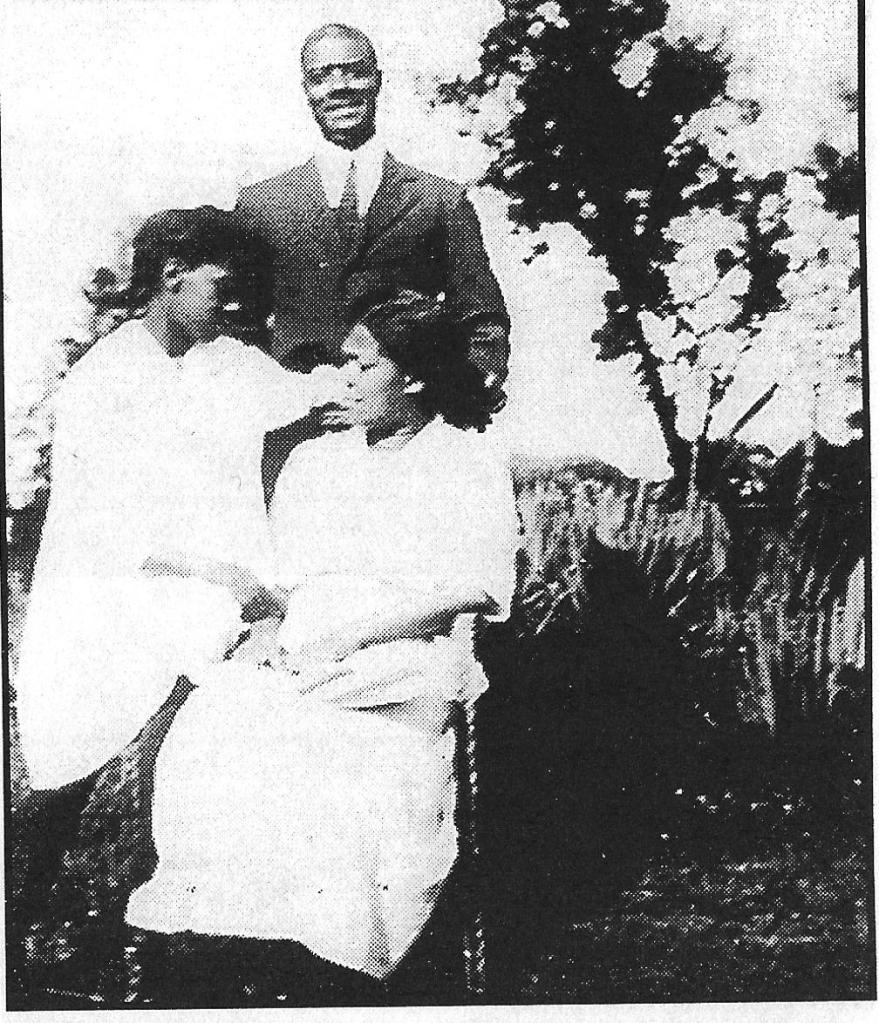
(l) C. Seymour Diggs, Coachman for the Samuel Shoemaker family (late 1800s) (r) C. Seymour Diggs, wife Amanda Figgs Diggs and their daughter Virgina Temple Diggs (early 1900s)
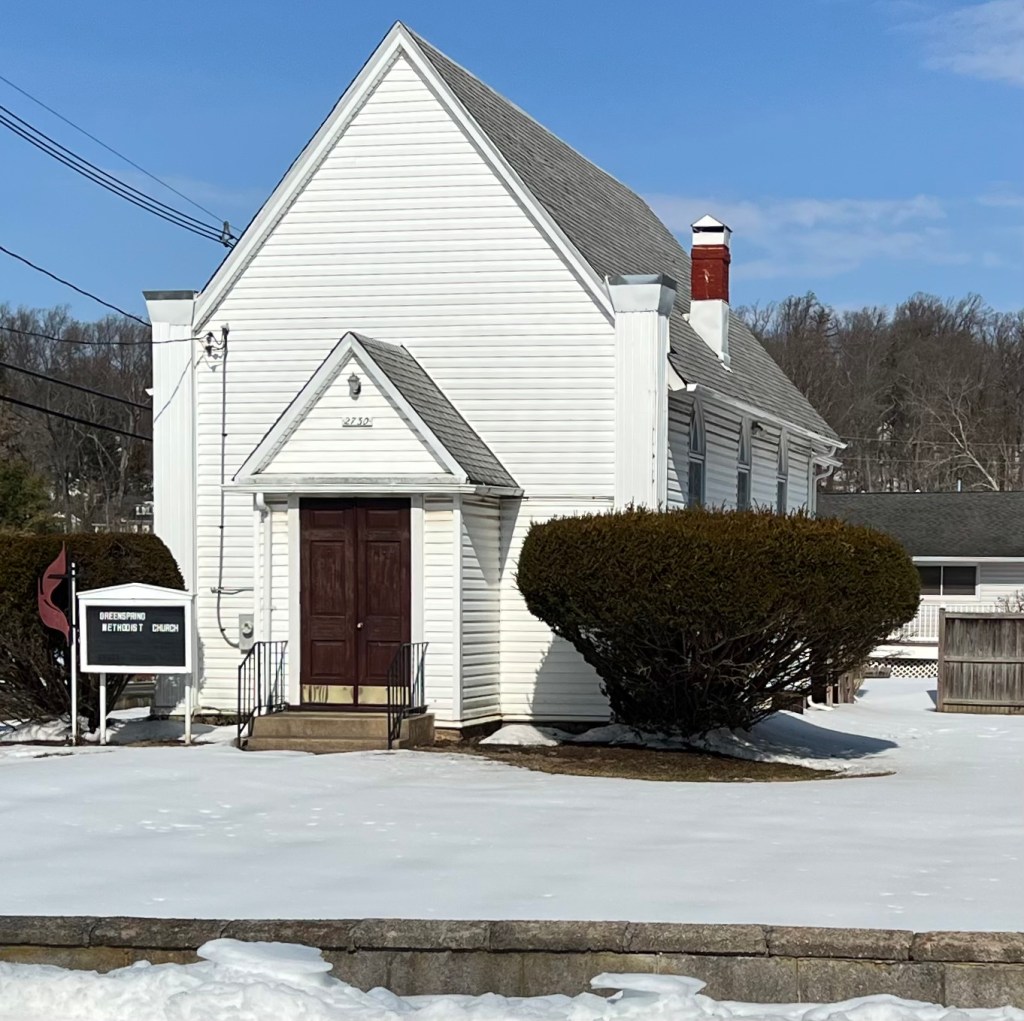
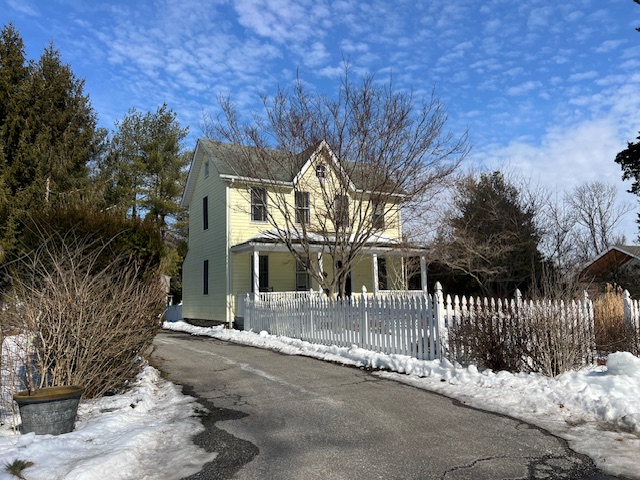
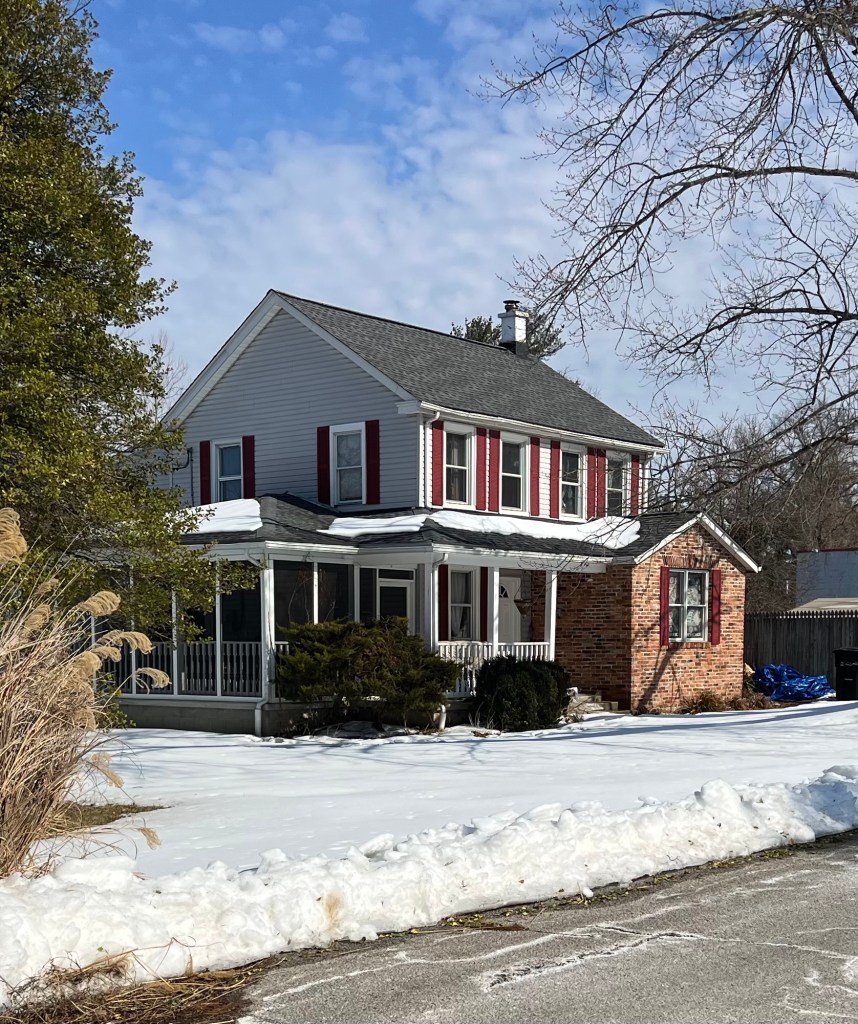
(l)Historic African American Green Spring United Methodist Church (1881)( (r) Historic African American Gothic Revival houses along Green Spring Valley Rd. (ca. 1890s)
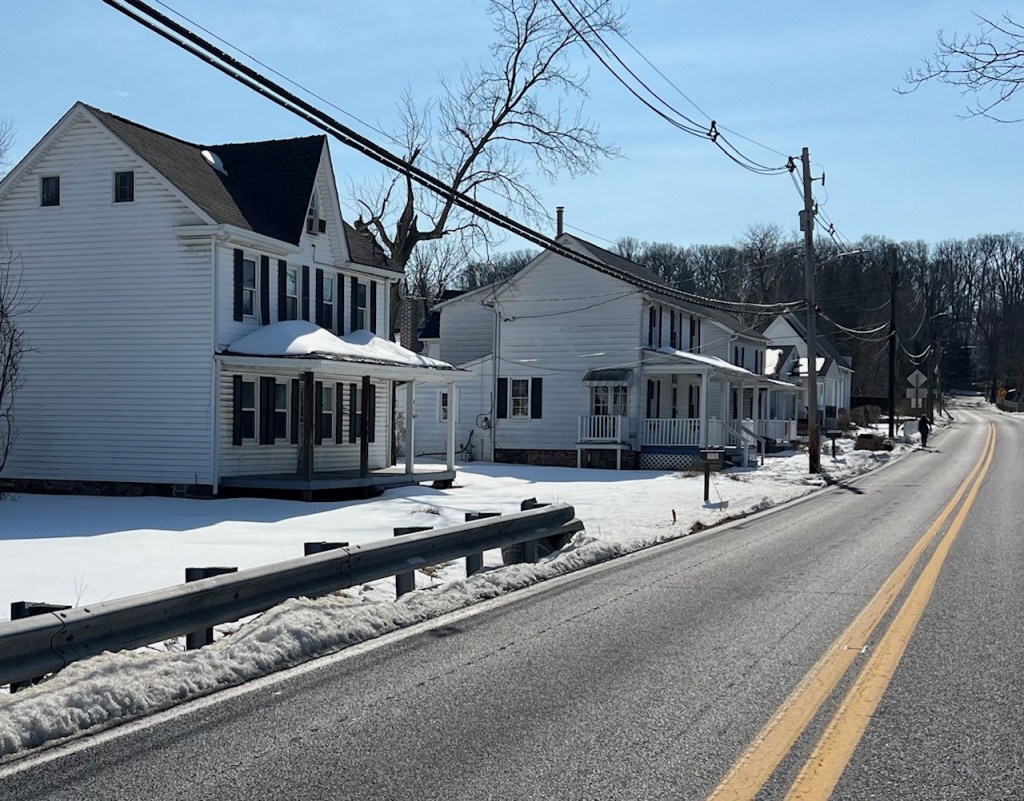
Historic African American homes (ca. 1870) along Spring Hill Rd., formerly Railroad Ave. and originally a railroad bed of the Greenspring Branch of the Western Maryland Ry
Chattolanee (cha-toh-LAY-knee), an unincorporated area within Baltimore County’s Green Spring Valley Historic District, was first prized by Susquehannock Native Americans as a health retreat for its pure water and streams. That’s what chattolanee means—”pure water”. (The 18-mile-long Jones Falls traverses through the Valley with its headwaters located less than 3 miles to the north.)
This area of the County contained plantations dating from the 18th century. Today there are few farming operations, but the Valley remains rural with large estates in generational ownership and more modest dwellings and commercial areas interspersed and along the edges.
One of those generational families is the Stewart’s. C. Morton Stewart (1829-1900) was a prosperous 19th-century Baltimore coffee importer and shipping merchant.
In 1880 or 1881, Stewart paid $1,000 for the construction of a modest Carpenter Gothic style church for African Americans on a portion of his land at the northeast corner of Greenspring Valley Rd. and Railroad Ave.; now Spring Hill Rd. Founded as the Green Spring United Methodist (Colored) Church, it was dedicated in August, 1881.
Stewart gave the church building to Blacks employed in the area as domestics and farm laborers in exchange for their agreeing to remain at work in the Valley rather than move closer to the city. About 45 families attended in its earliest days.
Thus a small enclave of African American homeowners and renters was established on the dirt roads adjacent to the church. “It was very common for Colored families to have their homes built by the White families they work [sic] for,” Joseph Albert Diggs, Jr., told author Louis S. Diggs for his 1998 book In Our Voices: A Folk History in Legacy.
“According to the church historical document,” as reported in Diggs’s book, and whose family was a co-founder, “many Blacks were in some ways caught up in the web of slavery. Those living in the community were happy to have a place to worship, to give thanks for having survived many trials and tribulations. Since freedom of worship was one of the three freedoms upon which our country was founded, it was a meaningful experience to build their own place of worship.”
Green Spring United Methodist’s first pastor, church co-incorporator and trustee, the Rev. Alfred Young (1850-1928), was born enslaved on the Eastern Shore. He was taught to read and write, and in turn helped his fellow enslaved to learn these critical skills. After slavery was abolished, Young pursued his education at Howard University, graduating from its School of Theology.
Elsewhere in his book, Diggs provides a lengthy interview of Charles Seymour Diggs’s daughter Virginia. She offered that one of her most memorable experiences as a young girl in Chattolanee was the visits of her paternal grandfather, John Eli Diggs: “During the winter months I could see my grandfather walking through the snow coming down Green Spring Valley Road and he would usually be encrusted in snow and ice, and he had a large, heavy moustache. As soon as he would enter the house, he would start to thaw out. He dearly loved me, and I deeply loved him. He would call out my name as a soon as he entered the house and I would run down the steps to greet him. He would be wiping has face dry and clearing out his head as he reached down to pick me up and ask me for a big kiss. All of the moisture still dripping from his moustache was just not a nice sight, but I would hold my breath and get this big, wet kiss from my grandfather. I hated it, yet I loved it.”
With limited funding for building schools in the County just after the Civil War, especially for “colored schools” which funding wasn’t mandatory until 1872, churches provided space for needed public schooling rent-free. But by the early 1880s, those churches began receiving modest rent from the County School Board, probably including the Green Spring United Methodist Church. In 1920 its trustees leased nearby property on Railroad Ave. to the County for construction of a dedicated schoolhouse.
In a rural County school back then, the “outstanding feature was the large stove near the center of the room, often a ‘10-plate stove,’ burning chunks of wood or an ‘egg stove’ for coal.” Either stove kept children near it comfortably warm while those several rows back “were almost frozen,” as Diggs tells it. (The stove in the Green Spring church is centered along the east wall.) Also prominent “in a rural County school in the later 19th century was the bench on which set a bucket of water brought by larger pupils from the school well or a nearby home” for all the students to share by common ladle.
In 1890 Chattolanee was officially founded as an unincorporated community and resort destination by Capt. William L. Stork, a Civil War veteran and lawyer. It included the small enclave of African American residents living in stick-built houses, their church and a post office.
In that same year, Stork founded the Chattolanee Spring Water Co. which first began supplying green-glass bottled mineral water from natural springs to area residents and summer vacationers; then later to Baltimore City.
From the 1870s, Valley life was supported by the Western Maryland Railroad Greenspring Branch, which crossed over the Jones Falls just north of the Chattolanee African American enclave, until the 1930’s when the line was discontinued.
-Dick Williams, FTJF Board V. P., Membership, Partnerships & Development
Afterword: Sadly, the Green Spring church is not in use today. I would have liked to visit and perhaps attend a service.
Sources: BA-1620 Green Spring Chapel, (Green Spring United Methodist Church), Maryland Historical Trust; BA-3049–Chattolanee African American Survey District Garrison, Baltimore County 1865-1930, Maryland Historical Trust Maryland Inventory of Historic Properties; Green Spring Valley Historic District, Maryland Historical Trust; Louis S. Diggs, In Our Voices: A Folk History in Legacy, 1998; Martin K. Van Horn & Robert L. Williams, Green Spring Accommodation, 1996; and, Amy C. Crewe, No Backward Step Was Taken, 1949.
Editor’s Note- Our previous, original Juneteenth piece may be found here.
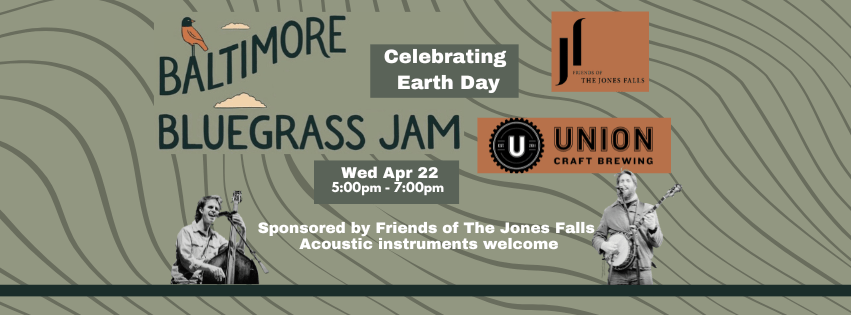
On a lovely late afternoon April 22, some 100 adults and young children gathered to enjoy the Baltimore Bluegrass Jam on Earth Day 2026 at Union Craft along with good food and drink.
During one of The Bluegrass Jam’s sets, a mom in the crowd was seen walking up to the stage area where the band was playing, after designating a friend to watch her young son. She then opened her guitar case. While singing into the mic on her tip toes, she offered a lovely ballad and another few songs. We later found out her husband was one of the band members.
What else on offer was an up-close guided tour of the constructed habitat wetland adjacent to Union Craft, a collaboration between the Friends of The Jones Falls and Union Collective.
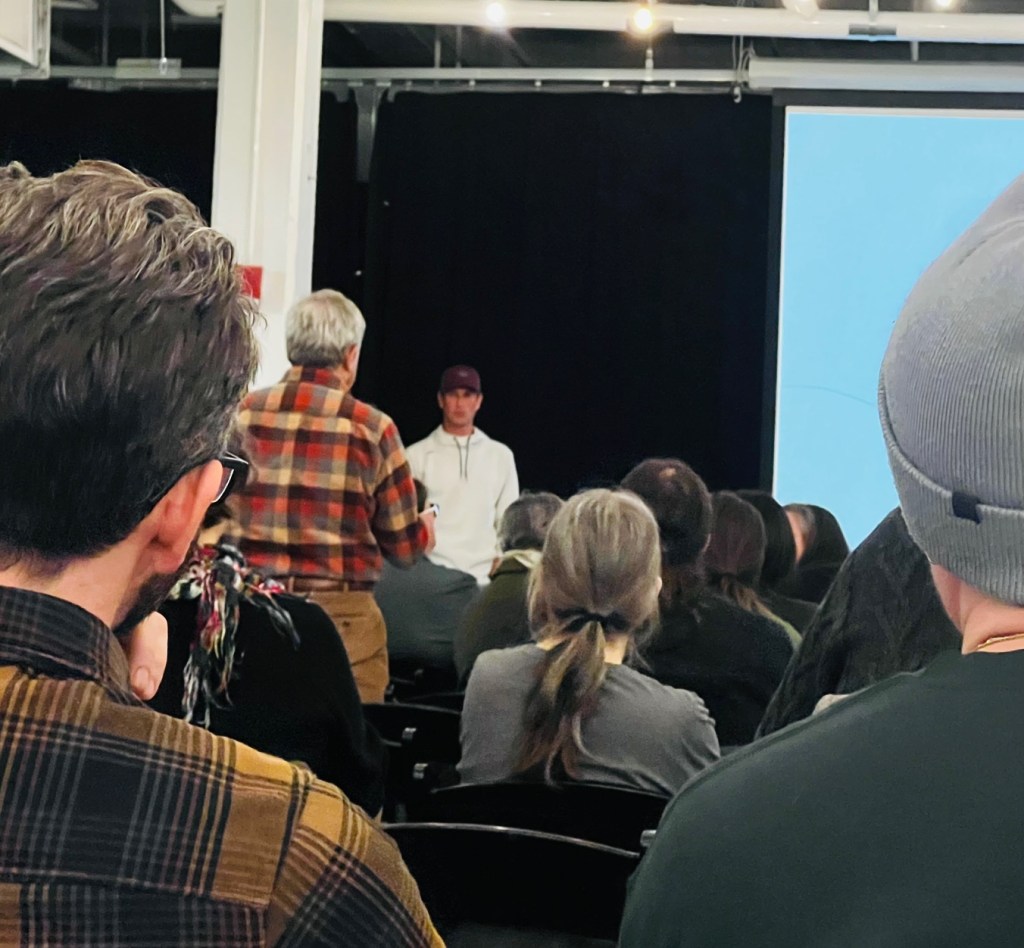
Hosted by Remington-based developer Seawall, the “Initial Meeting” for a proposed Falls Rd. remake took place on Tuesday, March 24, at R. House in Remington.
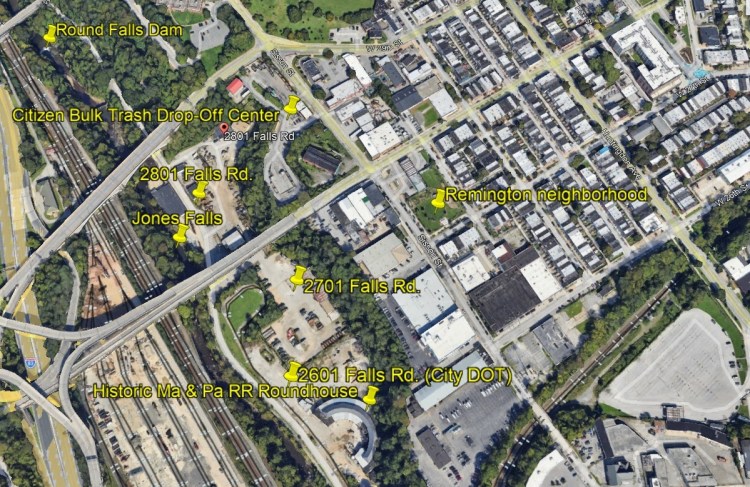
About 100 people listened to Seawall co-founder Thibault Manekin introduce his company’s initial approach to major lower Jones Falls corridor improvements following Seawall’s contracts for purchase of the Potts & Callahan industrial properties at 2701-2801 Falls Rd., and the conditional closing of the 2840 Sisson St. citizen’s bulk trash drop-off center. When closed, these purchases were said to foreclose the possibility of the Sisson St. center being relocated to the edge of the Jones Falls on Falls Rd.
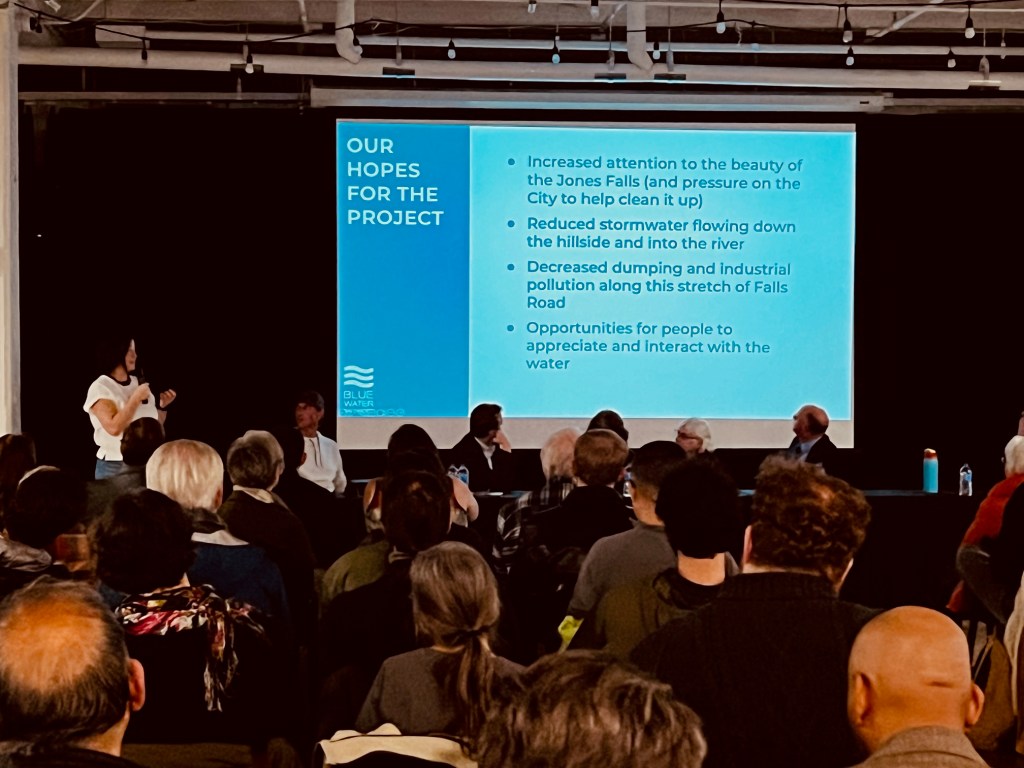
Mr. Manekin invited environmental and educational stakeholder groups and a neighborhood organization to present their views on the Jones Falls Trail/East Coast Greenway along the lower Jones Falls- Friends of The Jones Falls, Blue Water Baltimore, Baltimore Streetcar Museum, Jones Falls Gateway Project, Jones Falls 2076 and the Greater Remington Improvement Association.
Imagining alternative futures for the Jones Falls River
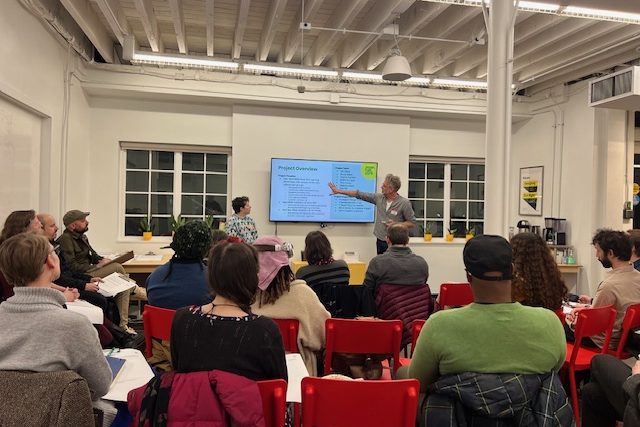
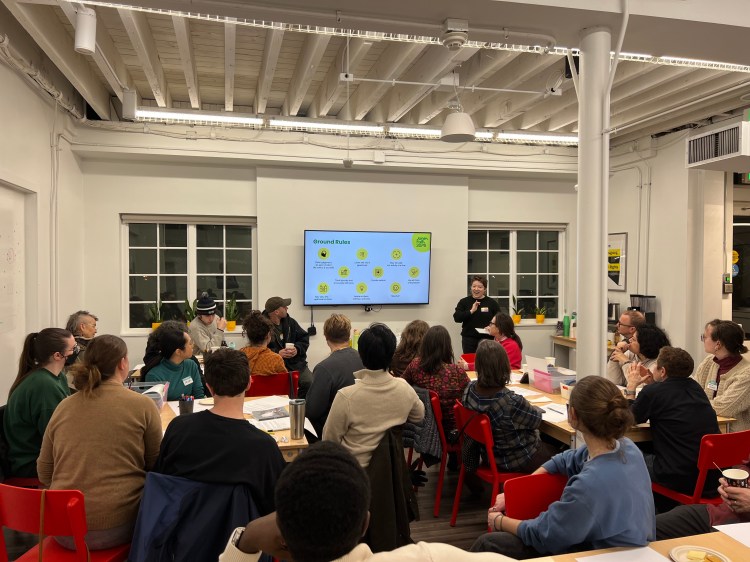
Architects, engineers, urban designers, planners and a brewer attended the first of two workshops in late February. The second workshop in early March was peopled by watershed advocates, area residents and an economist.
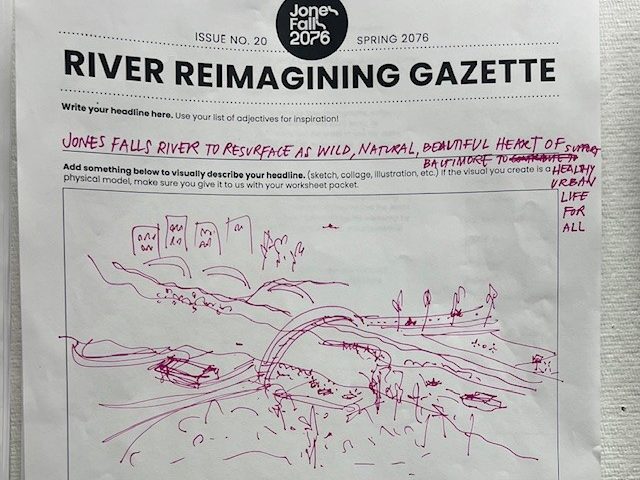
It was clever and kinda wild how facilitators Lee Davis and Steffanie Espat got some 25 or so attendees at either workshop thinking beyond-the-box towards a more natural, vibrant and enticing lower Jones Falls by 2076.
From a pocket boombox, Bad Bunny and other performers set an underlying rhythm for imagining during the workshops. Pencils, colored markers, sticky notes, heavy-duty pipe cleaners and other supplies became tools for dreaming on large sheets of paper.
The organizers will showcase some of the work at Old Goucher art venue AREA 405 on May 9th. A museum exhibition of commissioned works envisioning the lower Jones Falls is planned for The Peale in the fall. To follow their visioning work, visit the Jones Falls 2076 website.
-The Editors
Editors’ note: Lee Davis is the Co-Executive Director of the Center for Creative Impact at MICA. Steffanie Espat is the Center’s Co-Design Lead.
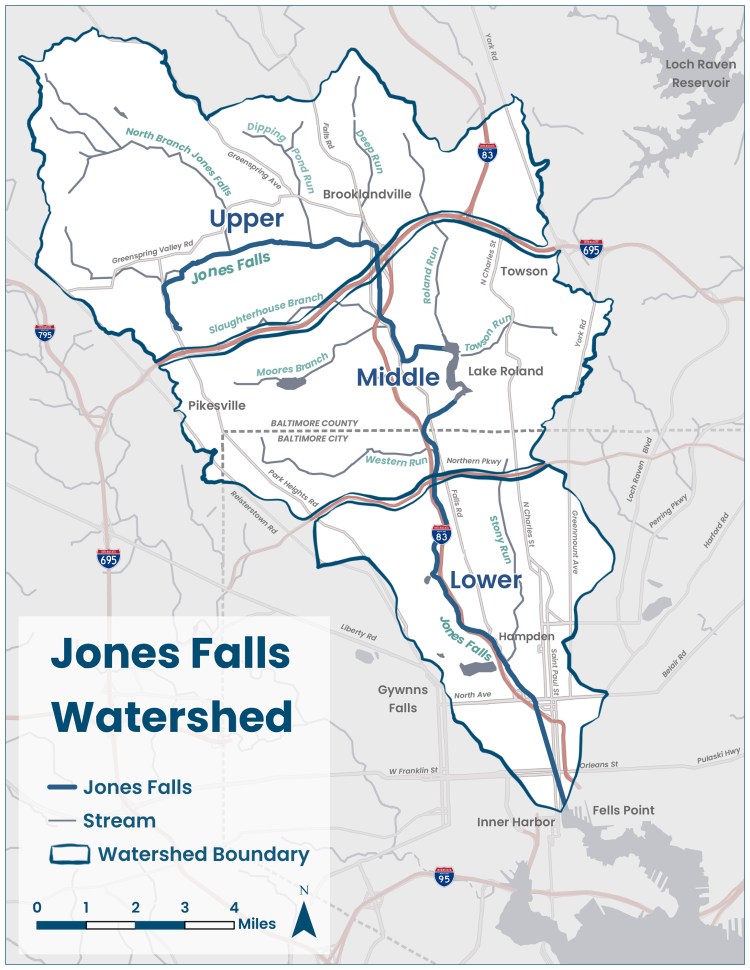
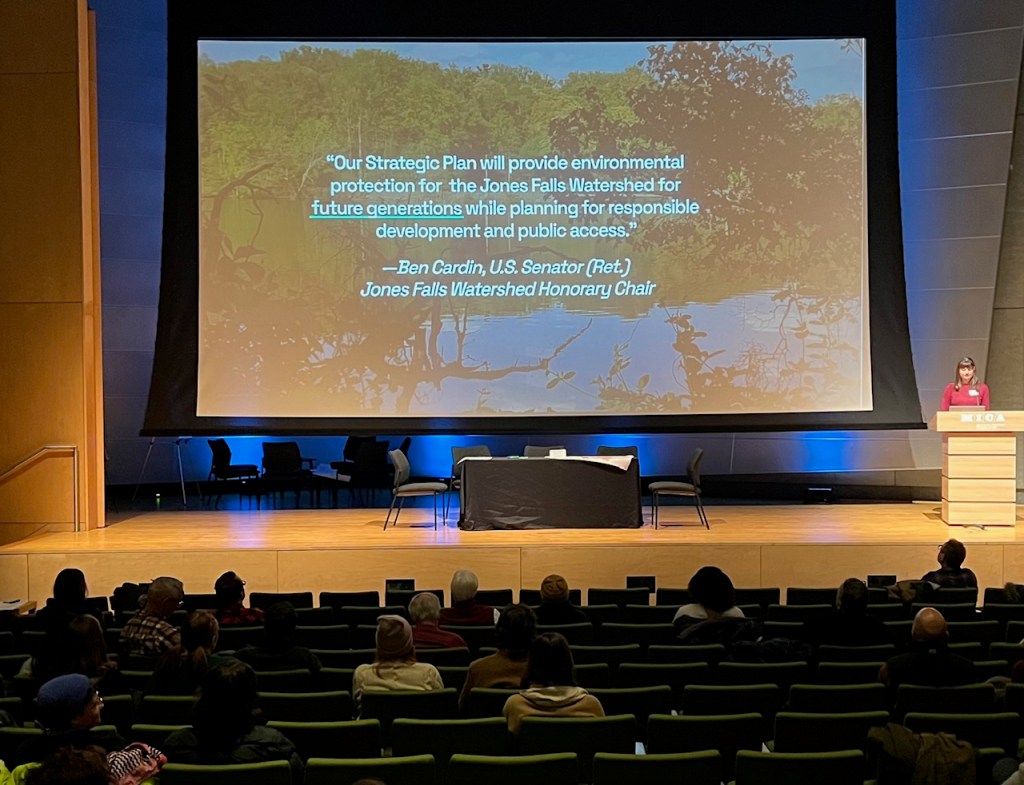
Thanks to many, many of you, the Jones Falls Watershed Strategic Plan is off to a great start with 200 enthusiastic and knowledgeable individuals attending the three listening sessions!
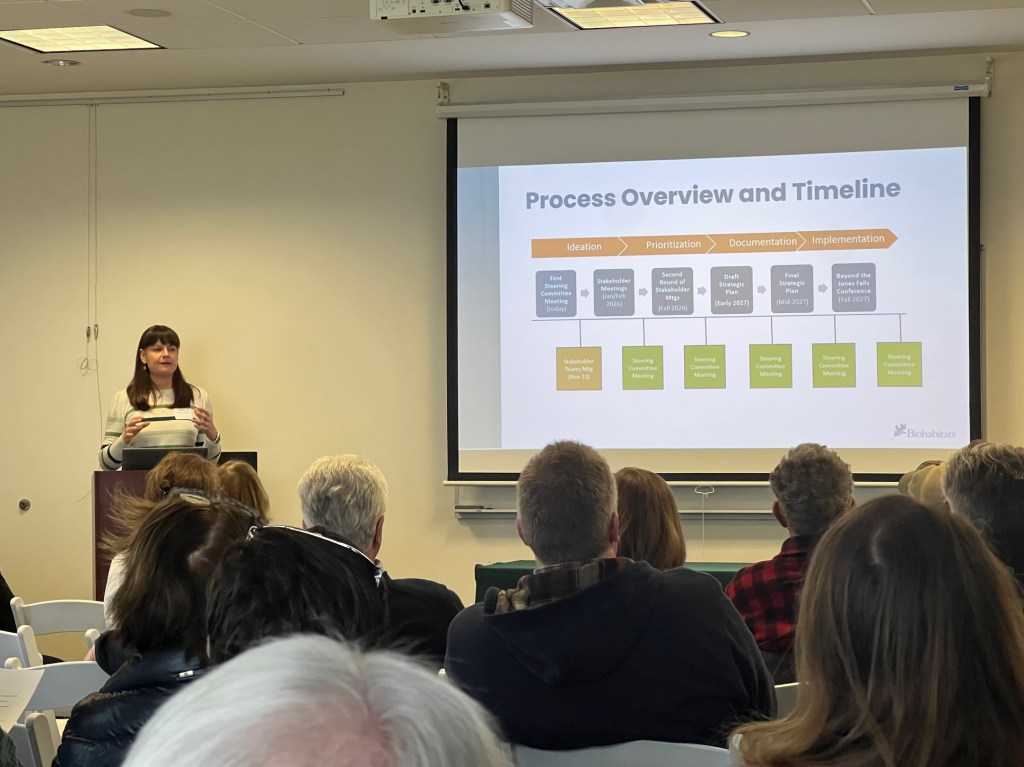
Rebecca Winer-Skonovd of Biohabitats, FTJF’s consultant firm, presented an overview of the Plan’s goals and processes at the three February events – also available on the Watershed website. Adam Lindquist of the Waterfront Partnership spoke at two of the sessions on the history of the Jones Falls, reminding everyone of the importance of this effort for the watershed that ultimately flows into the Inner Harbor.
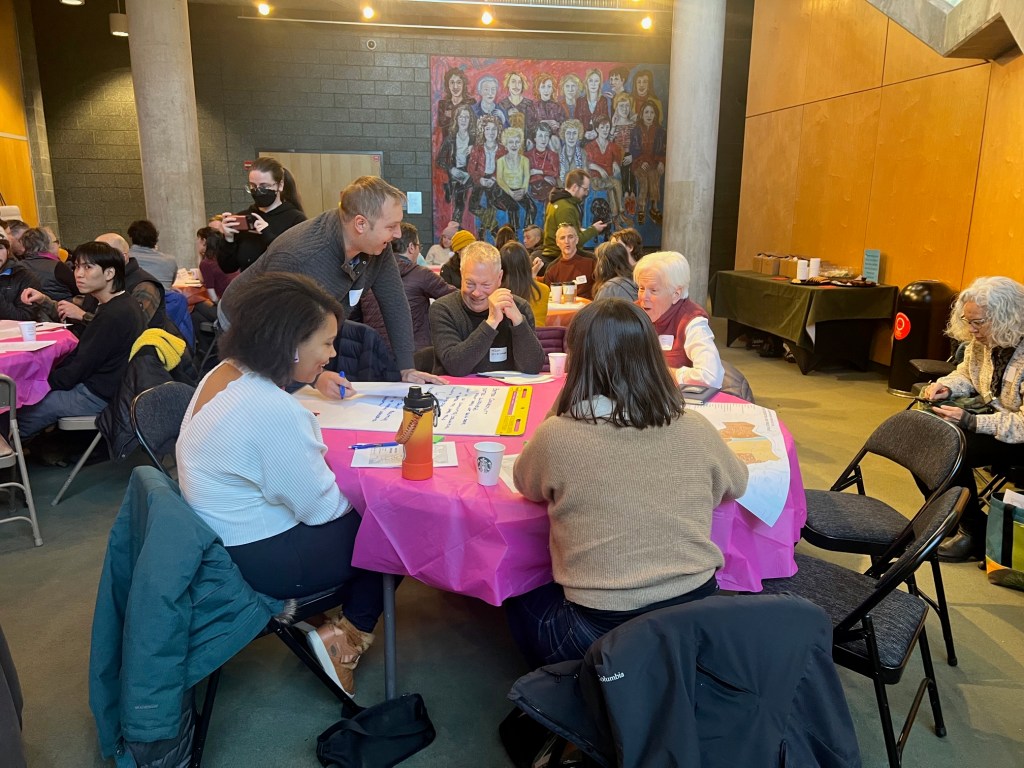
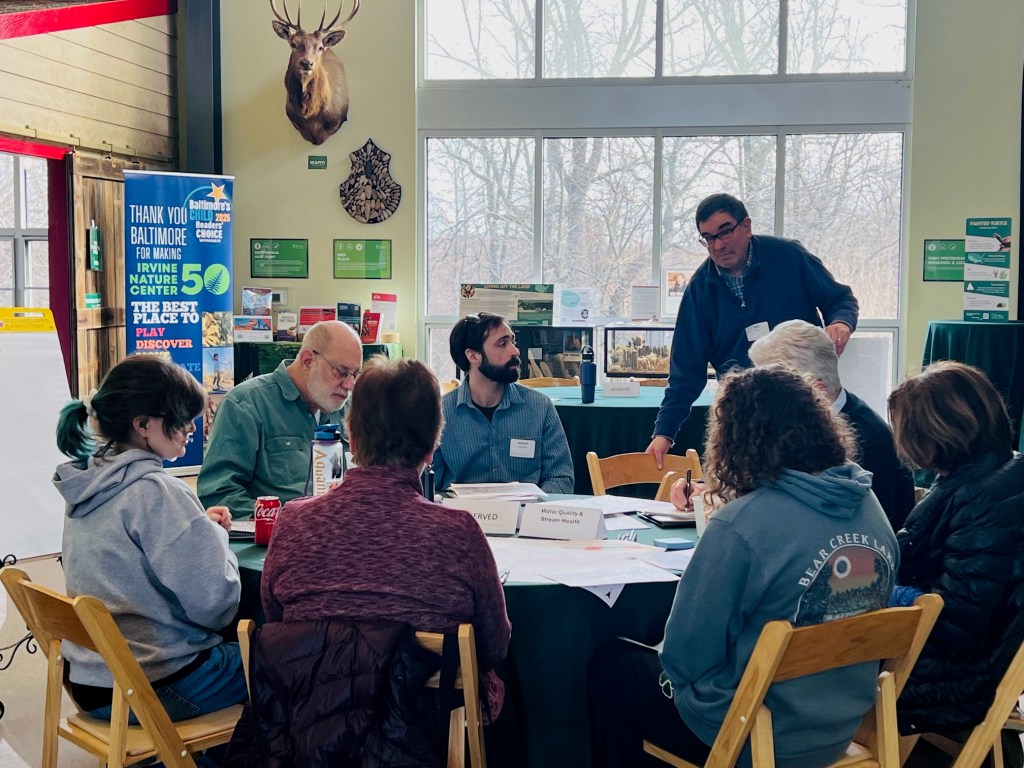
Each of these introductory presentations was then followed by tabled breakout groups organized around the following Watershed topics: Water Quality & Stream Health; Habitat & Biodiversity; Access, Recreation & Public Space; Land Use, Infrastructure & Flooding; and, History, Culture & Community Stewardship. Illustrative maps relating to each were at the tables along with a brainstorming facilitator and scribe.
Participants were assigned to two of their preferred topics among the five. Survey forms were completed as a means of starting the 45-minute facilitated sessions, then turned in afterwards. The ones I participated in were very exciting, reinforcing for me the public interest in and importance of this effort. In all, we received over 150 survey forms that Rebecca and her team are presently reviewing and analyzing.
I concluded each of the sessions with a reminder that this is the first-ever resident-led planning effort that will inform both City and County elected officials of the importance of and ways to protect and enhance the Watershed for generations to come.
Many well-deserved thanks go to the hosting stakeholder organizations, the Irvine Nature Center, MICA and The Park School, for providing the meeting space and session facilitators!
We will be putting on follow-up sessions this fall to share draft recommendations and gather further input, so please let’s stay in touch.
-Al Barry, FTJF Board Member, Jones Falls Strategic Plan Chair, ababalt@yahoo.com
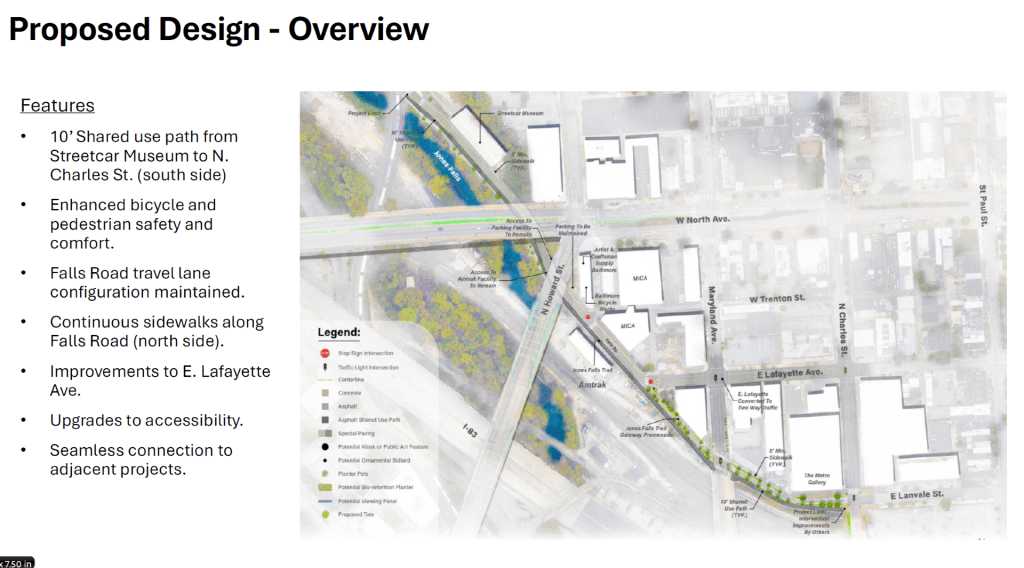
A capacity crowd of around 125 at MICA’s Fred Lazarus IV Auditorium attended the Jan. 15 presentation and Q/A about the Jones Falls Gateway designs. Matt Hugel of MICA and Mark Mullen of RK&K Engineering presented.
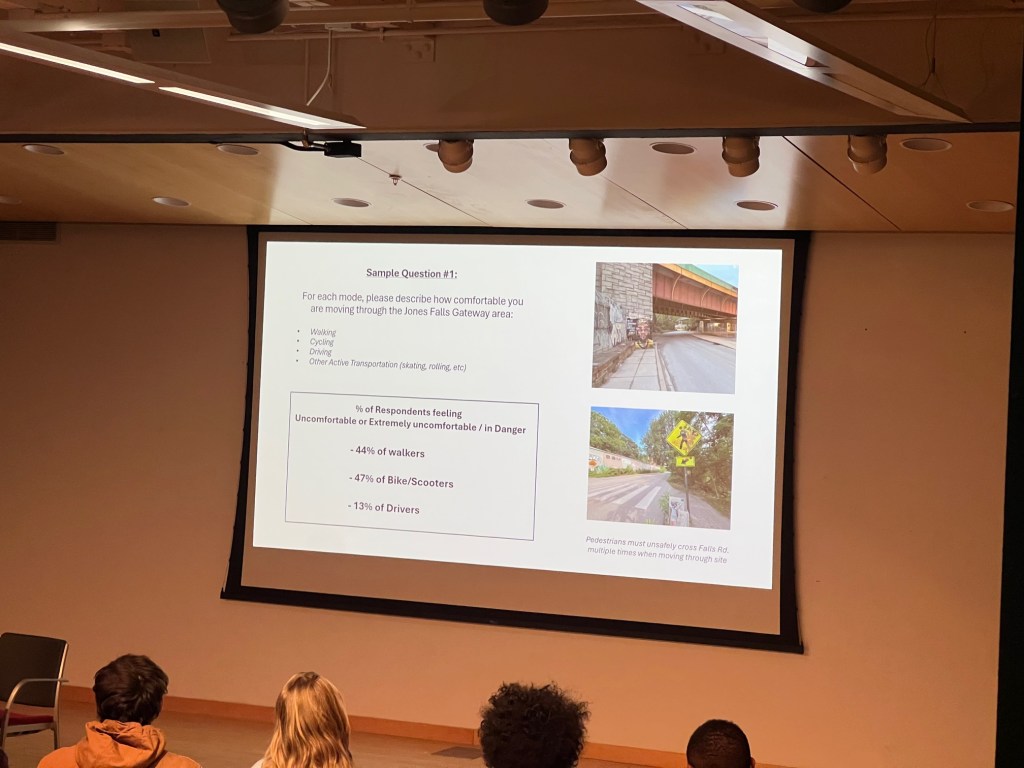
Mr. Hugel told the audience that over 500 surveys had been collected at Central Baltimore community association meetings and festivals. Here are a couple of the survey questions-
Sample #1 – How comfortable are you moving through this corridor?
About 44% of people walking and 47% of people biking or scooting reported feeling uncomfortable or unsafe. By comparison, only 13% of drivers felt that way.
The street is currently working best for the people who are most protected, and least well for the people who are most vulnerable.
The status quo of the Jones Falls Trail is not working, especially for casual users or people who are new to the trail.
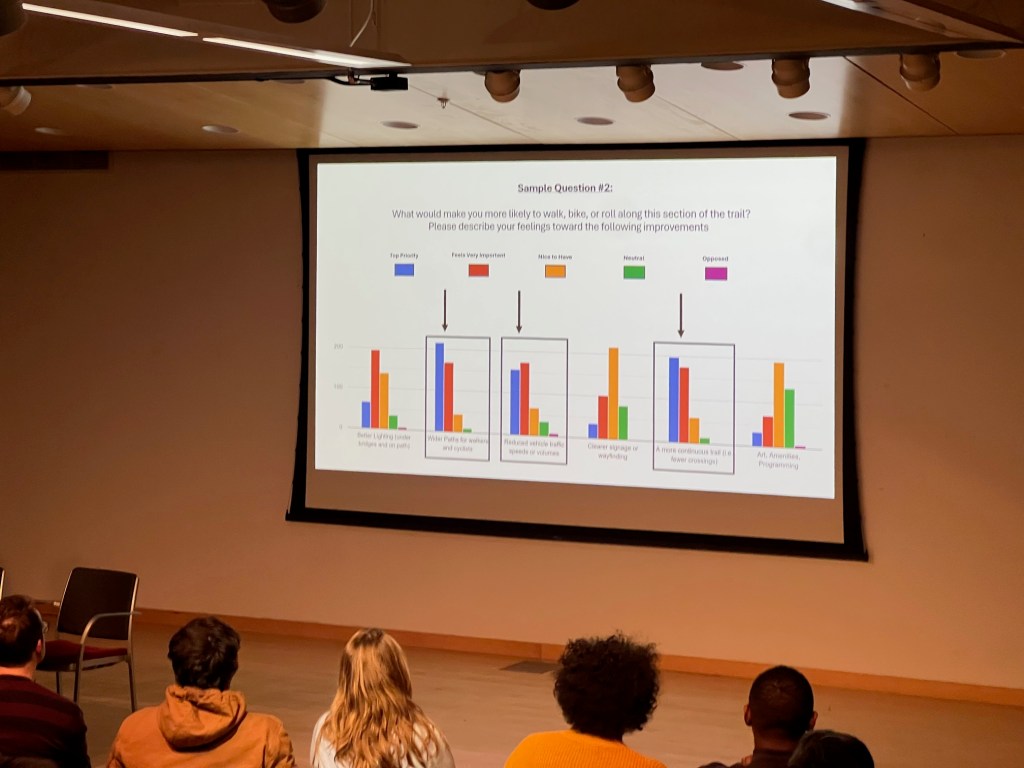
Sample #2 – What would make you more likely to walk, bike, or roll along this section of the trail?
Overwhelmingly, people prioritized safety, separation from traffic, better crossings, and slower vehicle speeds.
Importantly, many respondents explicitly asked for less vehicle dominance in the corridor.
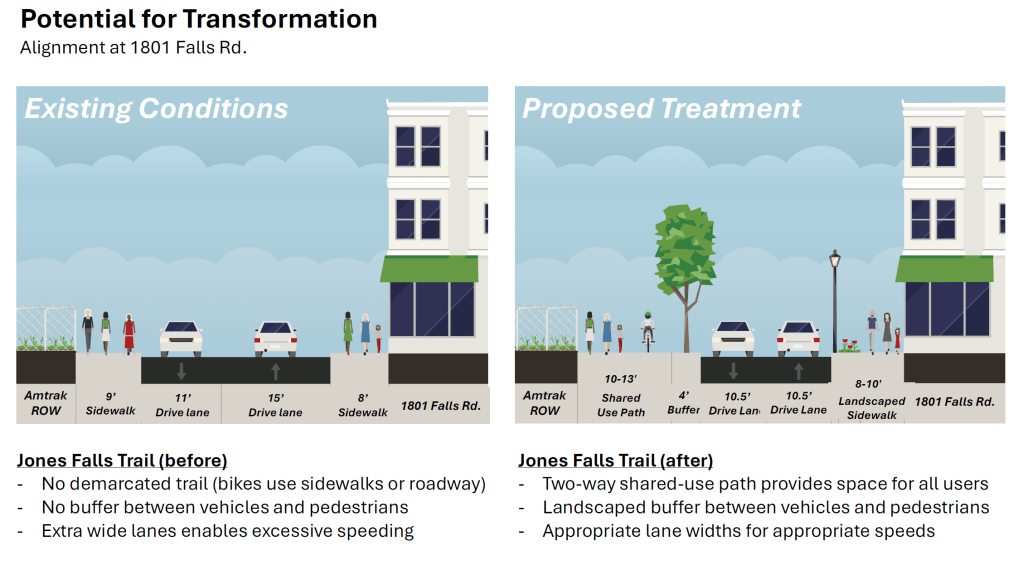
Mr. Mullen walked the audience through the concept drawings. Thereafter, reps of his team met attendees at breakout tables.
The preferred alignment for the 10-13′ shared-used path, illustrated here as the “Proposed Treatment” for the draft 30% design drawings, should be finalized in the approved 30% design plan to be released to the public later this spring.