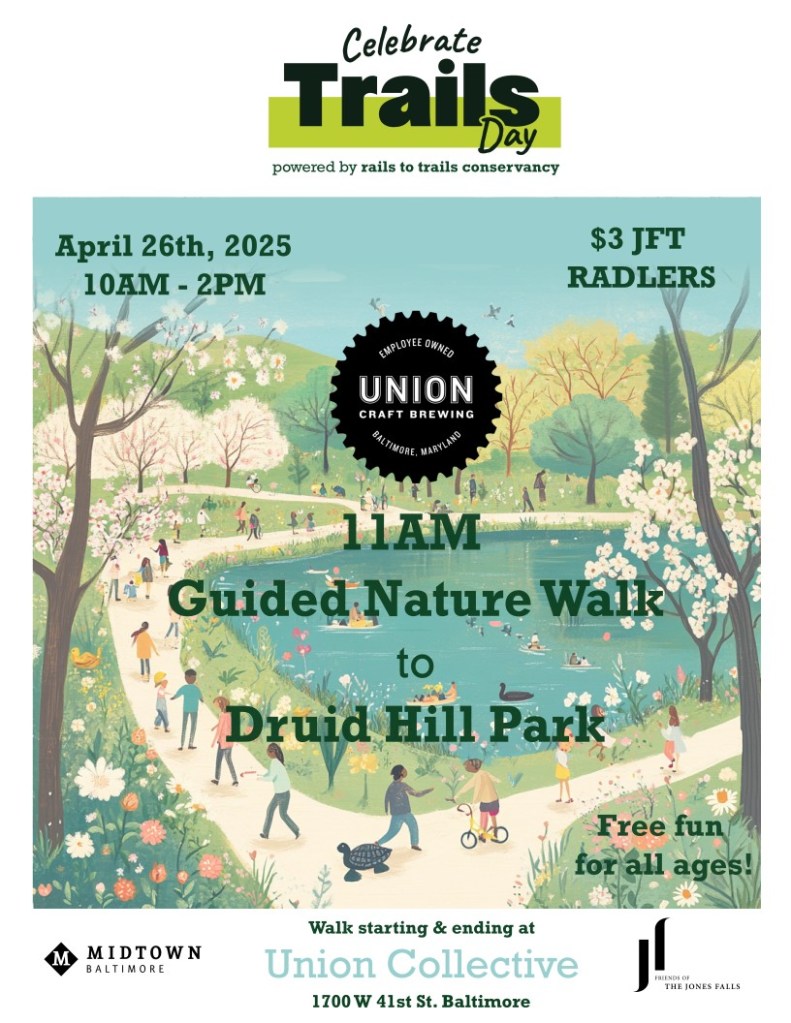
All of August, Union Craft in Medfield is offering its new Roundup & Match program benefiting FTJF.
The official kickoff is Wednesday, August 6th, from 4:30 to 8pm where FTJF Board members will be on hand to talk about its 2-Year Strategic Plan for the Watershed and other important initiatives. Come get a brew and something to eat.
And, by all means, please come see us! Bring your ideas to share!
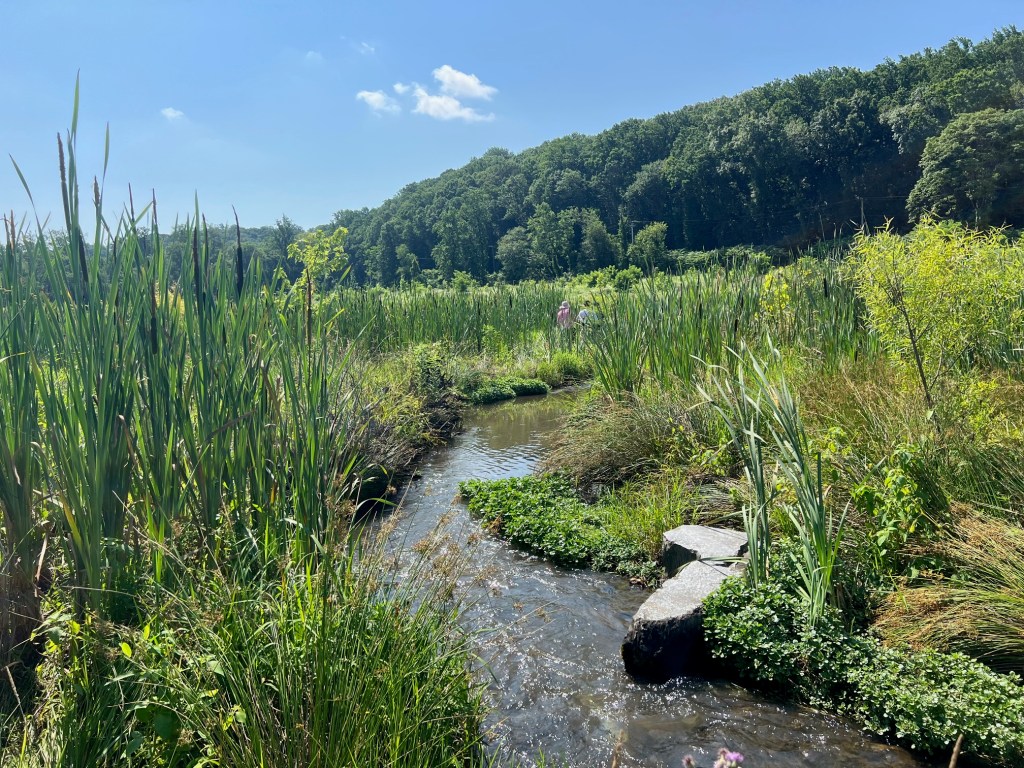
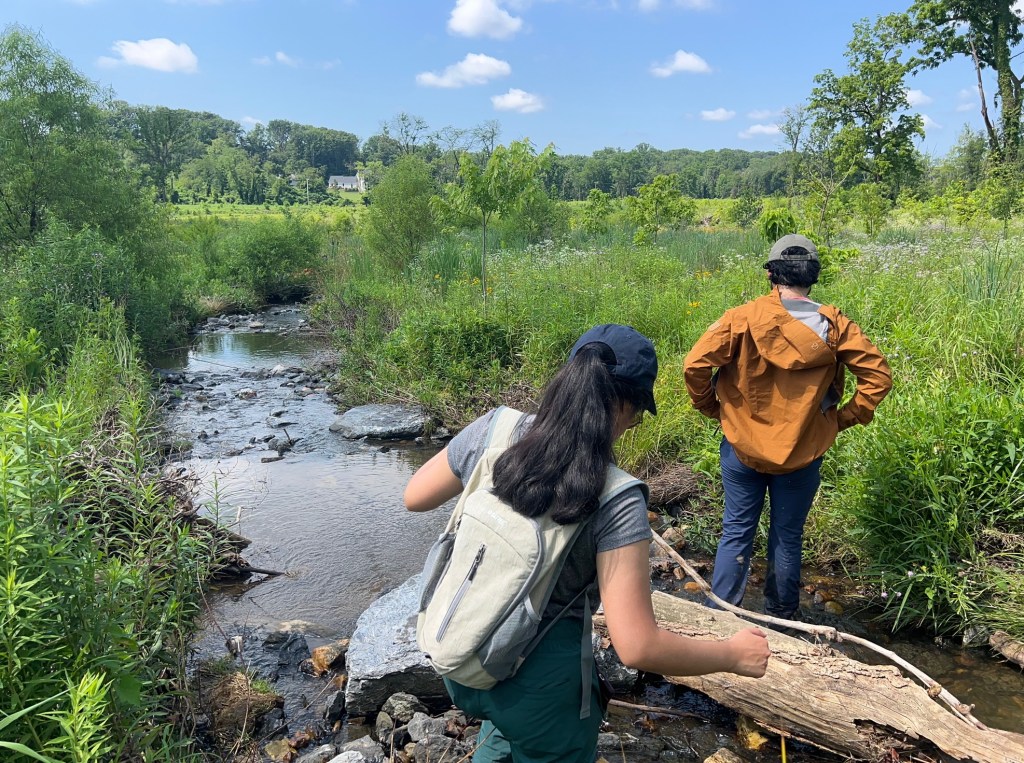
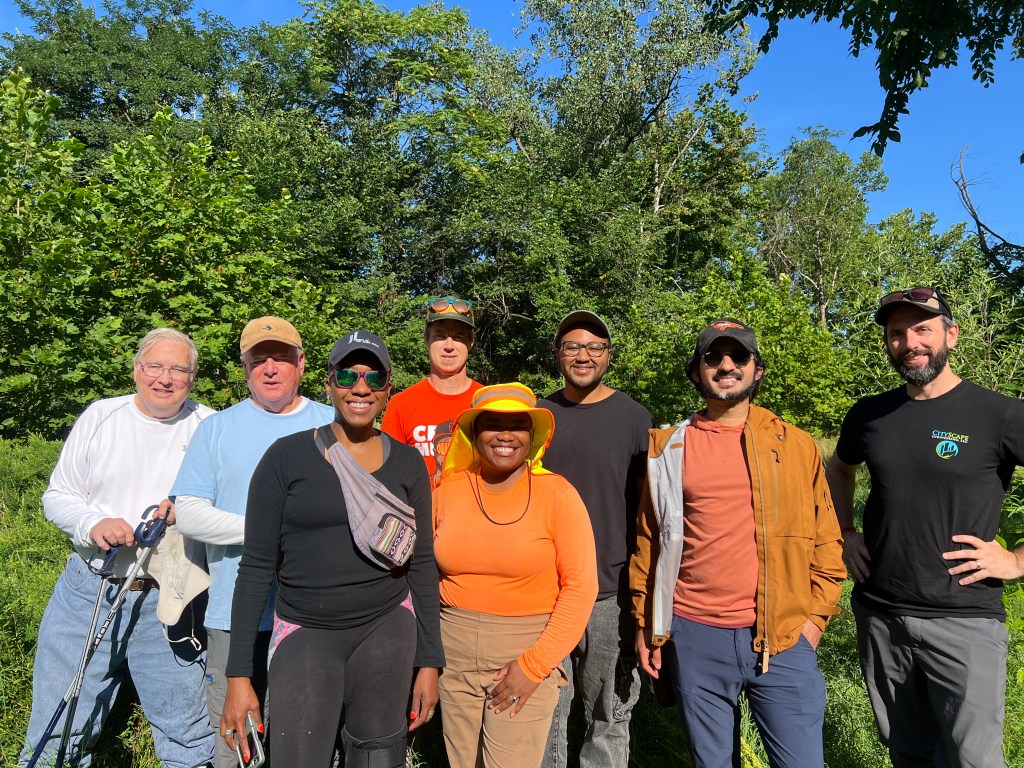
Some FTJF Board and Stewardship Committee members and a couple of others hiked recently in and around the Upper Jones Falls with an owner of the Eccleston Mitigation site in Baltimore County where more than 10,000 linear feet of the stream and 15 acres of wetlands have been reclaimed under a state conservation easement program six-plus years in the making.
Incidentally, the Jones Falls above Lake Roland (the Upper Jones Falls) is classified as Use III, meaning “non-tidal cold water.” It is “suitable for the support and protection of naturally reproducing trout populations.” From Lake Roland down to the Inner Harbor (the Lower Jones Falls), the stream is Use IV, meaning “recreational trout stocking waters.” This segment suggests suitability “for recreational activities related to trout, likely including fishing for stocked trout.” (Reference: Maryland DEP.)
The restoration actions accomplished are a big enhancement to habitat for non-native Brown trout and other wild fish living in the stream. For one, better flowing stream water leads to higher oxygen levels in the water. For another, a healthy flow of nutrients and organic matter through streams has a positive effect on natural food webs.
From contractor JMT’s “Projects” page: “The entire site was deforested as recently as 60 years ago according to historical aerial photos, and multiple buried tile locations were identified within the project limits as evidence of purposefully drained wetlands to increase tillable farmland. Additionally, emerald ash borer destroyed much of the green ash canopy on which the stream reach formerly depended upon for thermal regulation.”
Further: “The principal restoration design goal for the mitigation site was to restore and stabilize the brown trout fishery on the Upper Jones Falls. Approximately 30 years of data have identified that brown trout are decreasing in numbers as the water temperature warms due to watershed development and climate change. The fact that this stream flows from Baltimore County and through the center of Baltimore City, and provides the future potential for the brown trout population to increase within the city limits, make it a desirable project for Baltimore County and Baltimore City.”
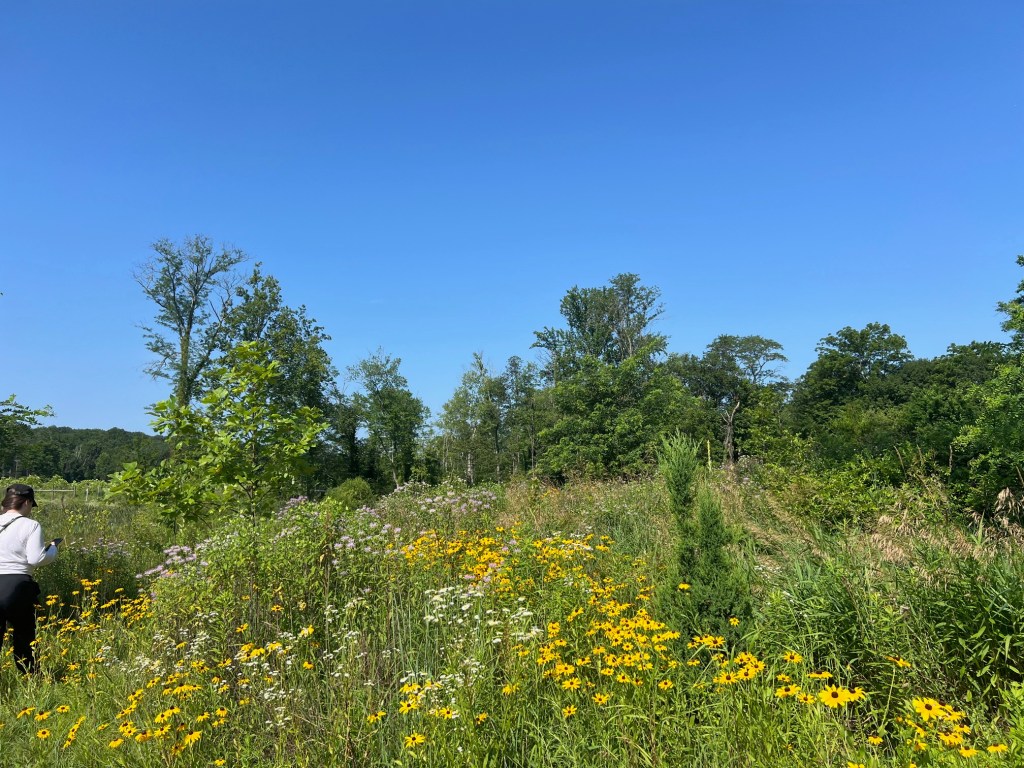
15,000 trees and shrubs were planted in support of the stream restoration/floodplain reconnection project.
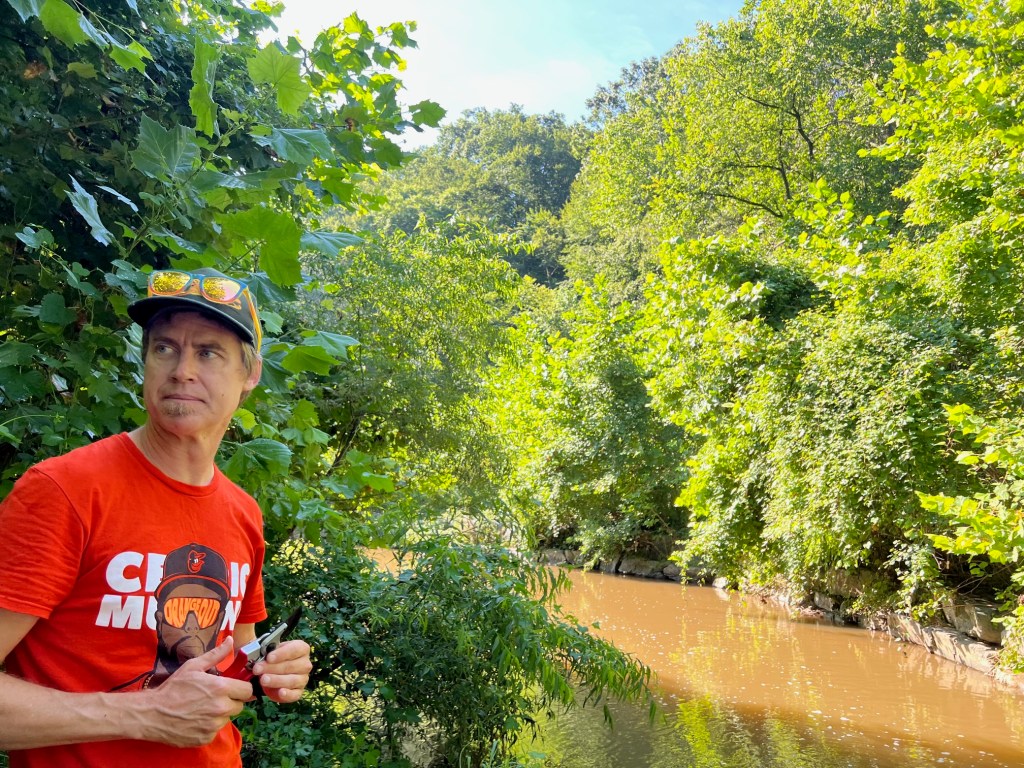
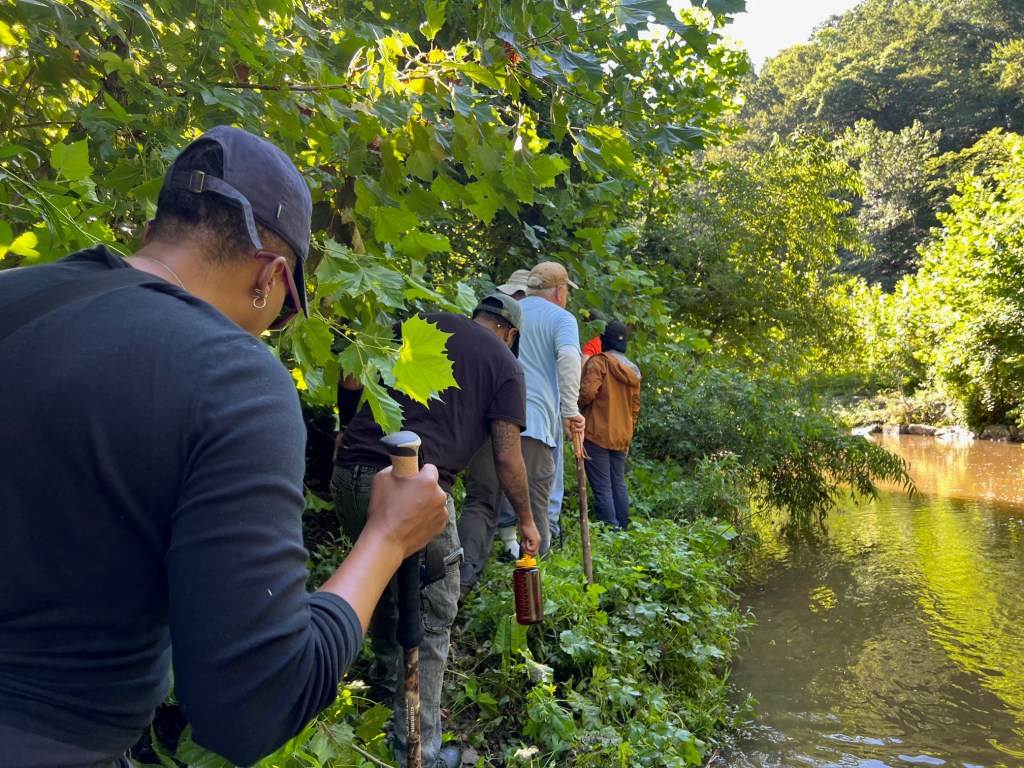
Late last month Maryland Trout Unlimited (MTU) Board member Darin Crew led eight FTJF Board and Stewardship Committee members on a hike to learn about and see directly the stream restoration work along a nearly 600 ft. section of the Jones Falls in the County, just south of I-83.
As one among the group put it: “I was amazed to learn that Brown trout are an integral part of this section of the Jones Falls. [MTU] has achieved part of its mission of stream restoration, showing that it can be done!”
What follows is a reprint of Darin’s September 12, 2017, blog post about the project for Blue Water Baltimore.
“A Shocking Discovery in the Jones Falls”
Some like it hot. Trout like it cool. To put [it] in scientific terms, they are a “coldwater obligate” species — meaning if the water is too warm (or too dirty), you won’t find any. As we work to make our waters swimmable and fishable, we need to make sure trout populations can thrive. And since trout are so sensitive to pollution and warm water, we can use them as a ‘barometer’ of ecosystem health.
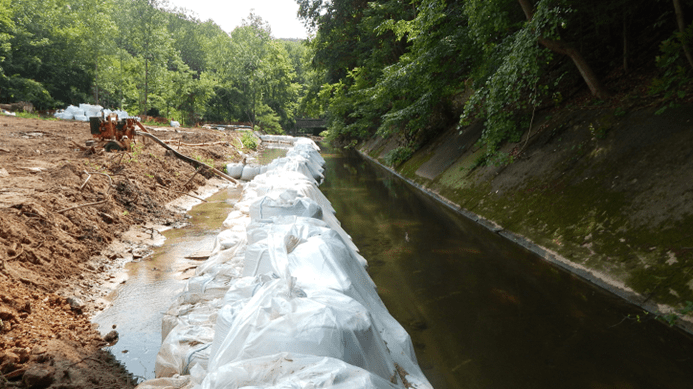
Last year, Blue Water Baltimore implemented the Jones Falls Stream Restoration project, the largest single-site restoration project in our organization’s history. We replaced 560 linear feet of concrete channel with natural features, creating deep pools that lower ambient water temperature. This work will provide significant water quality improvements, with a projected reduction of over 100 pounds of nitrogen pollution annually.
To read the rest of Darin’s blog post, click here.
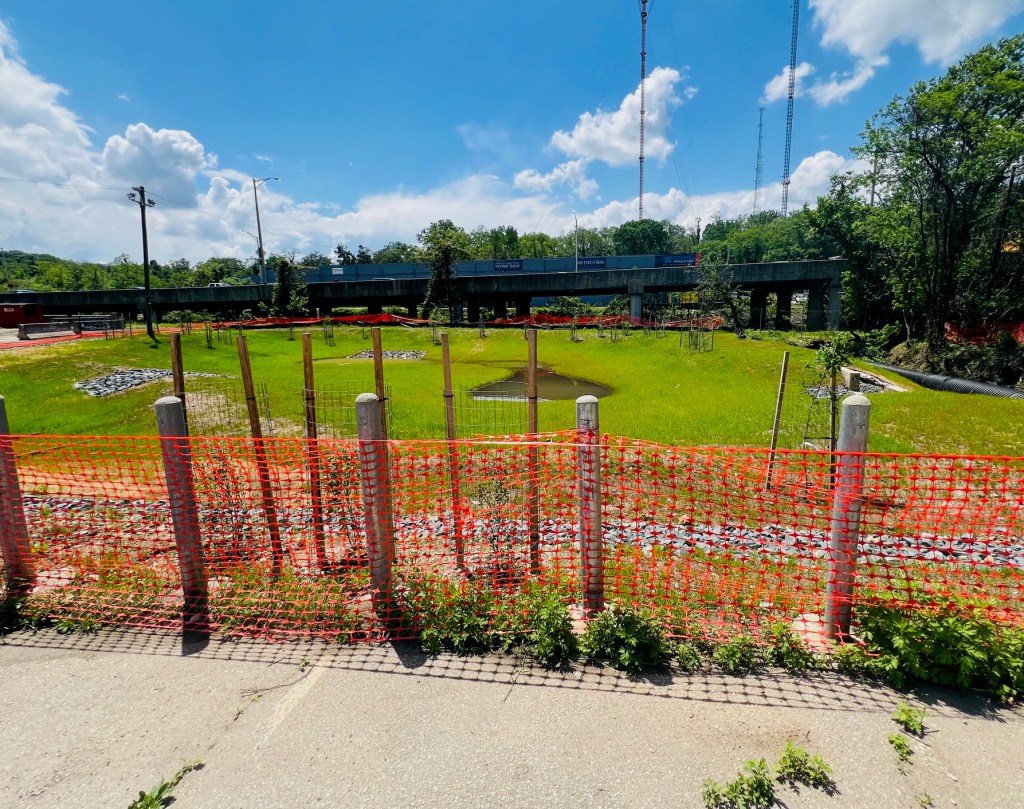
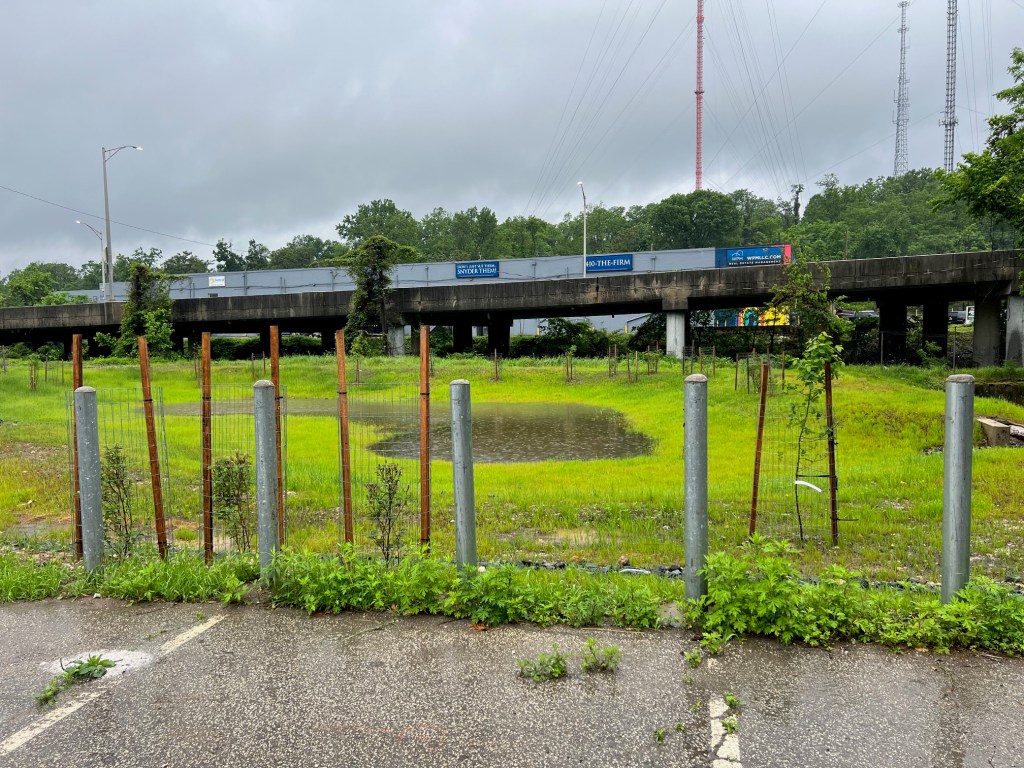
Arising out of the 2019 Union Collective Green Infrastructure Master Plan (referenced below the Major Projects toolbar interface) is a major environmental remediation project on privately-owned Baltimore City property in the spring of 2025.
The project entailed the installation of an artificial wetland on a 0.52-acre site between the Jones Falls and the Union Collective asphalt parking lot uphill of it. The purpose of this installation is to intercept stormwater runoff coming from the paved lot, to clean it of toxic vehicular fluids and dust that regularly settle on impervious surfaces between rain storms. When the polluted stormwater is running into the wetland, it is filtered through the soils and aquatic vegetation rather than fouling the Jones Falls below. Constructed wetlands are a Green Infrastructure Best Management Practice.
This project already hosts a colorful array of wildlife, including birds, waterfowl, amphibians and insects.
For the first phase of the project, the FTJF was awarded $204,348 by the National Fish and Wildlife Foundation, $73,984 from the Chesapeake Bay Trust which financial partner included the Baltimore City Department of Public Works, and $42,000 awarded by two Baltimore-based private foundations.
Phase 2 is expected to start construction the spring of 2026 with a hoped-for dedication around Earth Day in April. It will feature an accessible boardwalk partially rimming the wetland, and educational signage. Its funding source is a $142,075 grant from litigation settlement proceeds of the Fleischmann’s Vinegar plant fish kills in the Jones Falls until it was permanently shuttered. It has since been demolished.
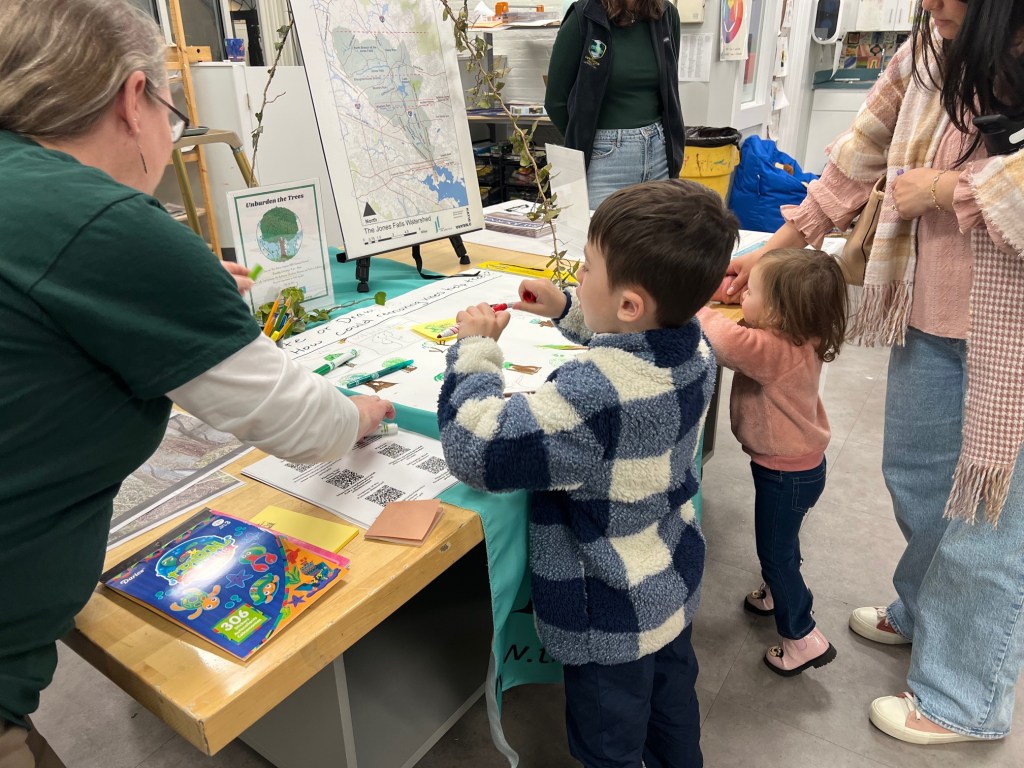
FTJF was invited to present aspects of environmental stewardship at the well-attended March 11th St. Paul’s Lower School STEM Fair. Thank you, STEM Director Nancy Dimitriades.
Stewardship Committee members Jessica Schue, Dick Williams and I demonstrated weed warrior work focused on non-native invasive (NNI) English ivy species removal. We brought a well-illustrated video about English ivy, prepared by Melissa Campanella, Stewardship Co-chair, as well as select landscaping tools and fresh-pruned cords of English ivy.
Engaging with students, parents and other family members, we explained how removing NNI vine and other harmful plant species is beneficial to trees and wildlife. Students were asked to draw pictures in response to the question: “How could removing vines help trees?” Their expressive drawings of trees (both sad-vined and happy-unvined), flowers and snails showed understanding and concern.
I found it interesting to hear stories from parents about how they were stewarding in their own backyards. They too struggle with NNI vines threatening their trees. We learned they are refusing to use chemical treatments on their landscapes in an effort to protect our streams as well as rejecting use of plastic bags and leaving turf grass high enough (min. 3”) to slow stormwater runoff into our waterways.
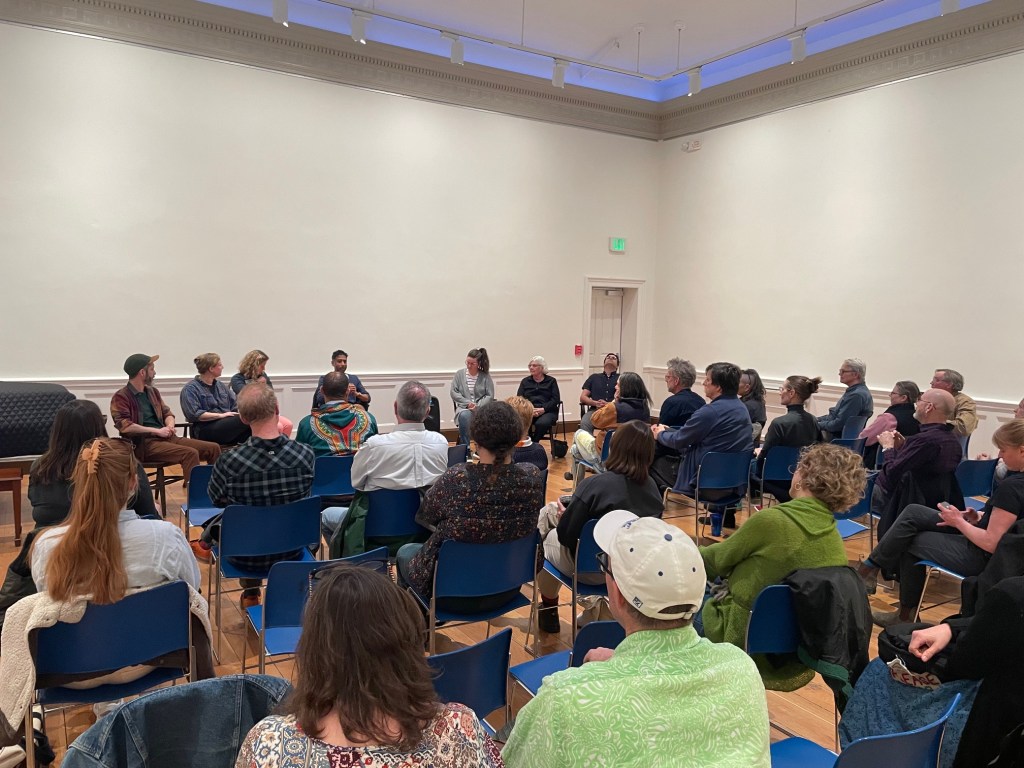
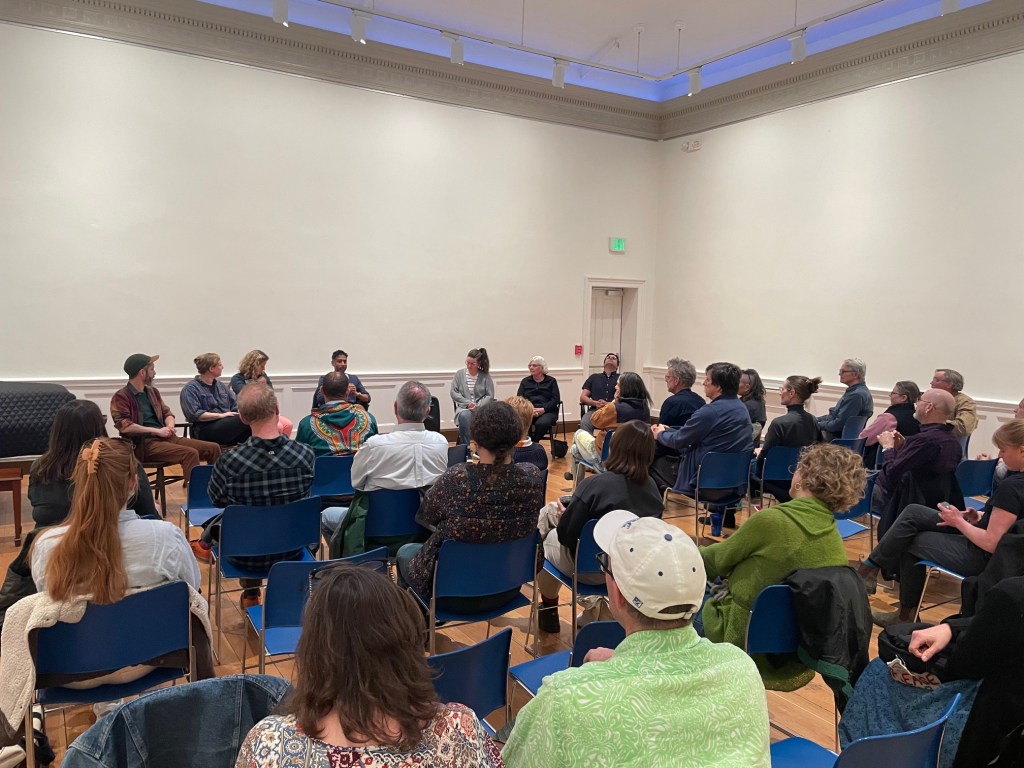
On the evening of March 21st a crowd gathered at The Peale museum in downtown Baltimore to attend a panel discussion on the human impact on the Jones Falls watershed, envisioning a more balanced, symbiotic future. The backdrop was the February-March 2025 exhibition, “The Future of Here: A Glimpse of a River Culture to Come.”
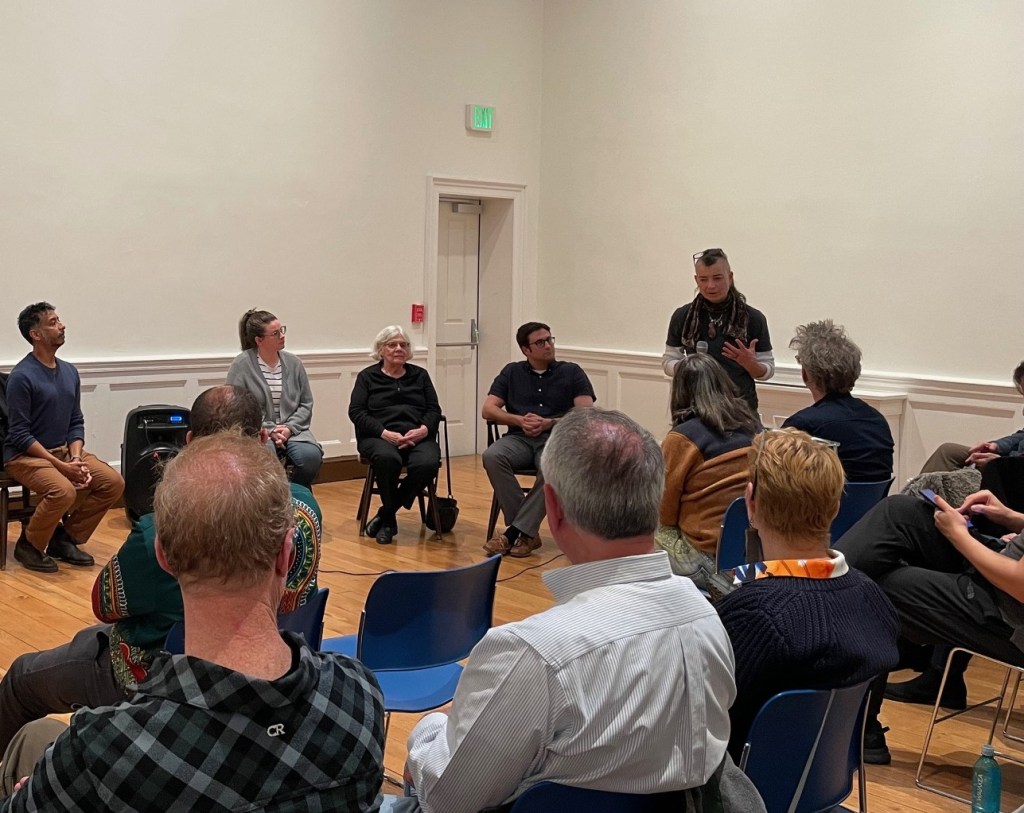
The panelists, led by exhibition co-organizer and environmental anthropologist Anand Pandian, included FTJF’s President, Sandy Sparks, and Board member and learning scientist, Melissa Campanella. Sarah Holter, Water Quality Program Manager, and John Marra, Community Program Manager, represented environmental non-profit Blue Water Baltimore. Sarah Koser, Chesapeake Bay Trust Grants Program Manager, and James Wolf, President of the Friends of Stony Run, rounded out the speakers. Exhibition co-organizer and visual artist Jordan Tierney also spoke from the audience.
From questions by Anand and audience members, each panelist shared personal and organizational testaments of challenges to and hopes for the Jones Falls watershed. Scarcity of resources and time, pollutants, invasive species and the looming threat of climate change were described as daunting challenges. But the panelists together offered resounding, hopeful reason for a prosperous Jones Falls ecosystem: the rich web of community.
Jordan and Melissa spoke to the beauty of the natural communities they see in our urban watersheds. Yellow-crowned night herons, hawks, foxes, fish, coyotes and humans are all neighbors in the urban watershed.
Jordan invited the crowd to see all living creatures, including plants, as more similar to than separate from ourselves. Both called for dissolving the manufactured barrier between the human and the natural world–so as to deepen our sense of hope in repairing and sustaining a thriving ecosystem of belonging in every part of every community.
On the evening of March 21, 2025, a crowd gathered at The Peale museum in downtown Baltimore to attend a panel discussion on the human impact on the Jones Falls watershed, envisioning a more balanced, symbiotic future. The backdrop was the February-March 2025 exhibition, “The Future of Here: A Glimpse of a River Culture to Come.”
The panelists, led by exhibition co-organizer and environmental anthropologist Anand Pandian, included FTJF’s President, Sandy Sparks, and Board member and learning scientist, Melissa Campanella. Sarah Holter, Water Quality Program Manager, and John Marra, Community Program Manager, represented environmental non-profit Blue Water Baltimore. Sarah Koser, Chesapeake Bay Trust Grants Program Manager, and James Wolf, President of the Friends of Stony Run, rounded out the speakers. Exhibition co-organizer and visual artist Jordan Tierney also spoke from the audience.
From questions by Anand and audience members, each panelist shared personal and organizational testaments of challenges to and hopes for the Jones Falls watershed. Scarcity of resources and time, pollutants, invasive species and the looming threat of climate change were described as daunting challenges. But the panelists together offered resounding, hopeful reason for a prosperous Jones Falls ecosystem: the rich web of community.
Jordan and Melissa spoke to the beauty of the natural communities they see in our urban watersheds. Yellow-crowned night herons, hawks, foxes, fish, coyotes and humans are all neighbors in the urban watershed.
Jordan invited the crowd to see all living creatures, including plants, as more similar to than separate from ourselves. Both called for dissolving the manufactured barrier between the human and the natural world–so as to deepen our sense of hope in repairing and sustaining a thriving ecosystem of belonging in every part of every community.





 Friends of The Jones Falls