
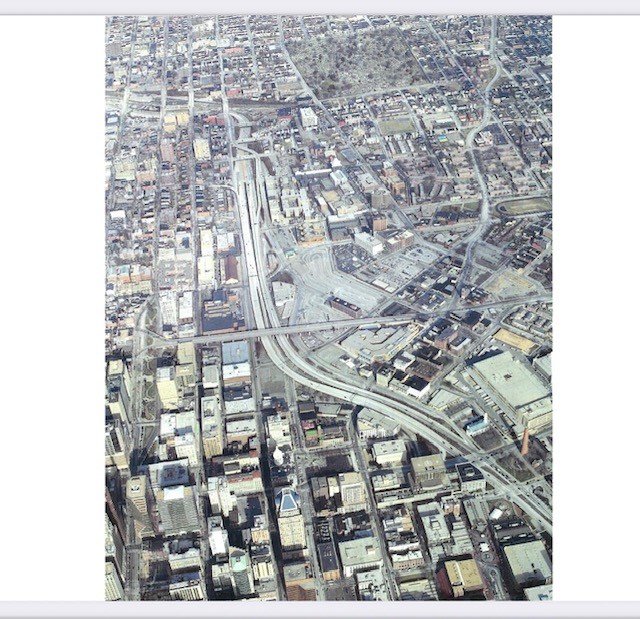

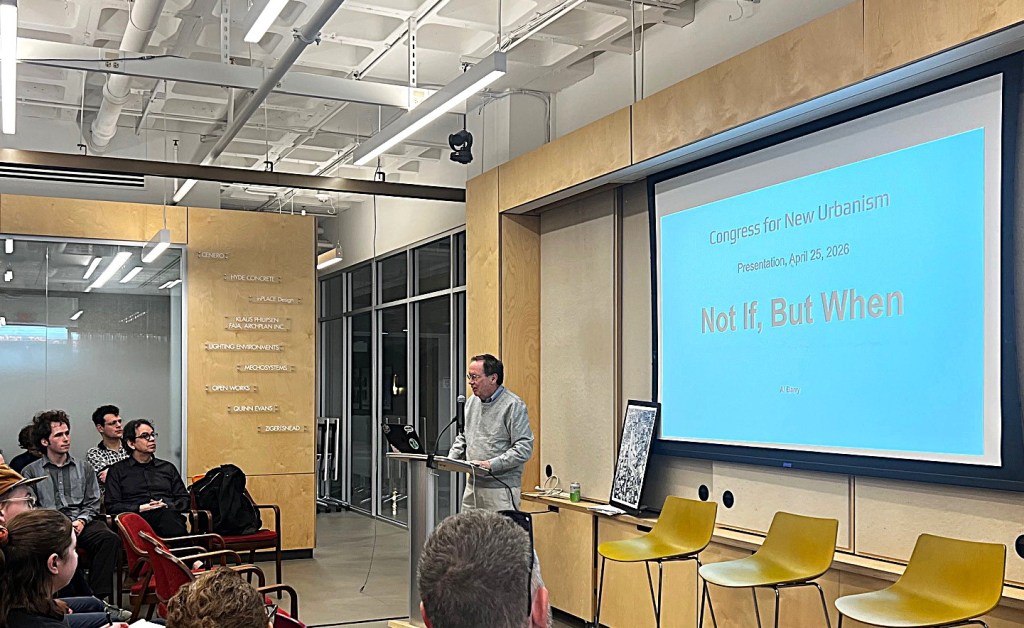
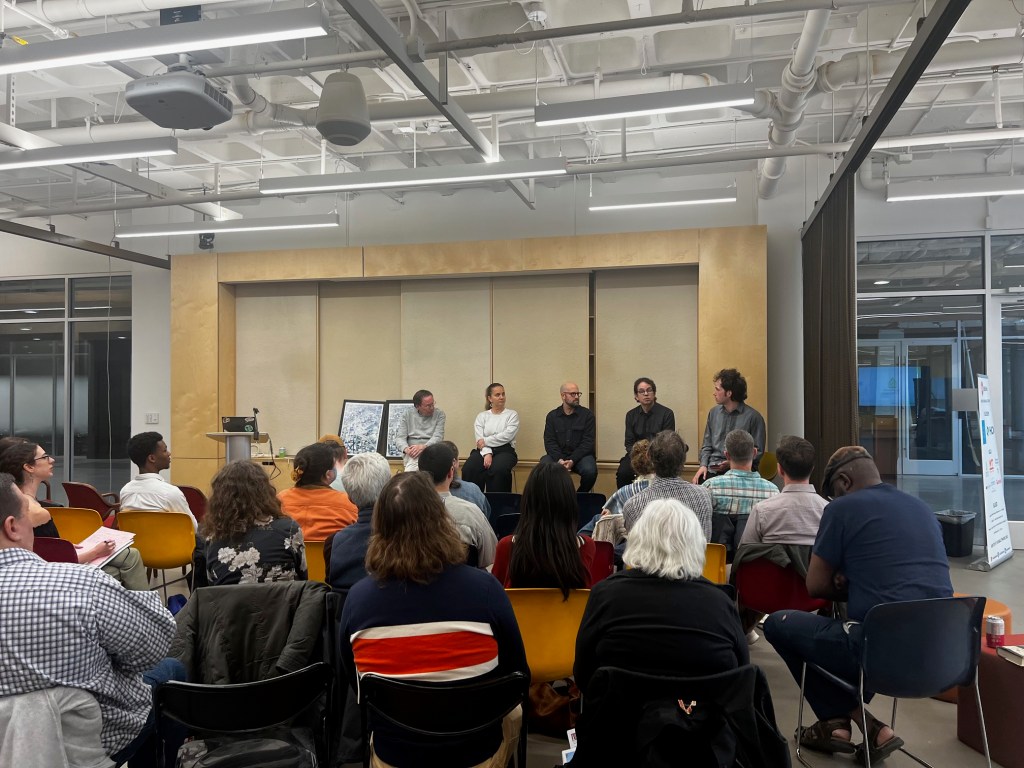
On April 25, The Congress for the New Urbanism Mid-Atlantic Chapter convened a panel of urban planning experts — Al Barry, Pavlina Ilieva, Gabriel Kroiz and Marc Wouters — for a symposium on removing the Jones Falls Expressway (JFX) along the lower Jones Falls to “daylight” more of the stream. The event came at a time when public interest around the vitality of the Jones Falls valley has been at its highest level in recent memory.
A problem we sought to address was that familiarity with JFX removal planning efforts had seemingly been lost. Our panel of experts reopened the topic, featuring local urban planning history, international precedents and real-life expressway removal implementation. Al Barry argued that the lower JFX coming down is “not a matter of if, but when”.
At its heart, the event was not a launch of an organized highway removal coalition. But, it was an opportunity to explore rationale and means utilized in other cities for restoring waterway views and urban green space rather than rebuilding crumbling expressway infrastructure for another 50 years.
“Daylighting” is an appealing concept, but advocates must go further. In his remarks, City Councilman Zac Blanchard noted the success of a lower JFX “daylighting” campaign will hinge on the ability of organizers to articulate a positive vision that will bring investment, amenities and greater cohesion to the surrounding areas; especially disinvested city neighborhoods lying to the east of the Jones Falls. Advocates including FTJF, Blue Water Baltimore and state and local stakeholders must come together as an alliance to push for a dense, fine-grained and diverse eco-district that stitches Mount Vernon and Old Town together through global best practices.
-Julian Frost, The Congress for the New Urbanism Mid-Atlantic Chapter (julianfrost71@gmail.com)
Editor’s note: Al Barry is a FTJF Board member

